There is a moment, late in Jordan Fein’s production of Fiddler on the Roof (now playing at the New Theatre, Cardiff) when the lovable milkman Tevye turns over his ramshackle milk cart – he has dragged it around the stage since curtain-up). The milk churns clatter to the floor and a strange semi-transparent liquid oozes out onto the stage. If it’s supposed to be milk, then the cow must be very sick. It’s a curious kind of liquid: one part milk, fifteen parts water – weak, diluted, and messy. I draw attention to this curious moment (which is probably intended to reflect the collapse of Jewish culture around 1900 on the eve on the Russian Tzar’s pogroms) because it reflected the production as a whole: a bit weak, a bit diluted, and a little bit messy.
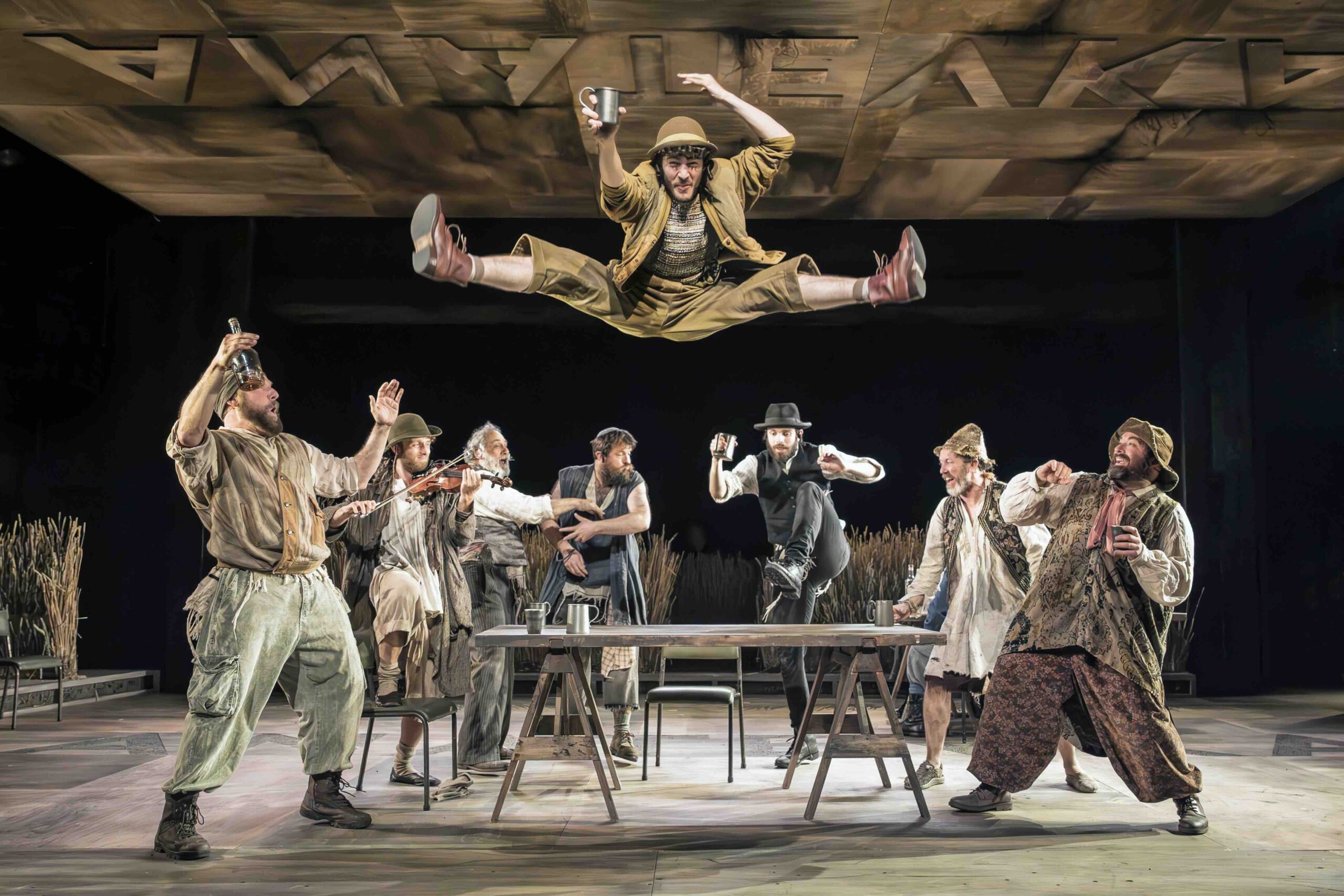
Fiddler is a musical theatre classic. It is more difficult to get right than one might think. There are two essentials though that need to be clear to any audience. First, there is the unity of the tiny shtetl community of Anatevka, somewhere in western Russia. They are a people united by faith and by tradition – as the famous zesty opening number, Tradition, stresses. They should, in theory, dress alike, behave alike, sound alike; if that is captured by the director then the gradual collapse of the community – infiltrated as it is by outsiders with ideas of revolution or – worse- by Gentiles who have no understanding of tradition -becomes crystal clear. In Fein’s staging, little Anatevka is positively cosmopolitan. Accents go from Ebbw Vale (Matthew Woodyat’s Tevye) to Brooklyn (Michael Siegel’s Lazar Wolf) via Golders Green (Jodi Jacobs’ excellent Golde) and Edinburgh (Gregor Milne’s uncharismatic Fyedka). Anatevka fails to be a community of tradition.
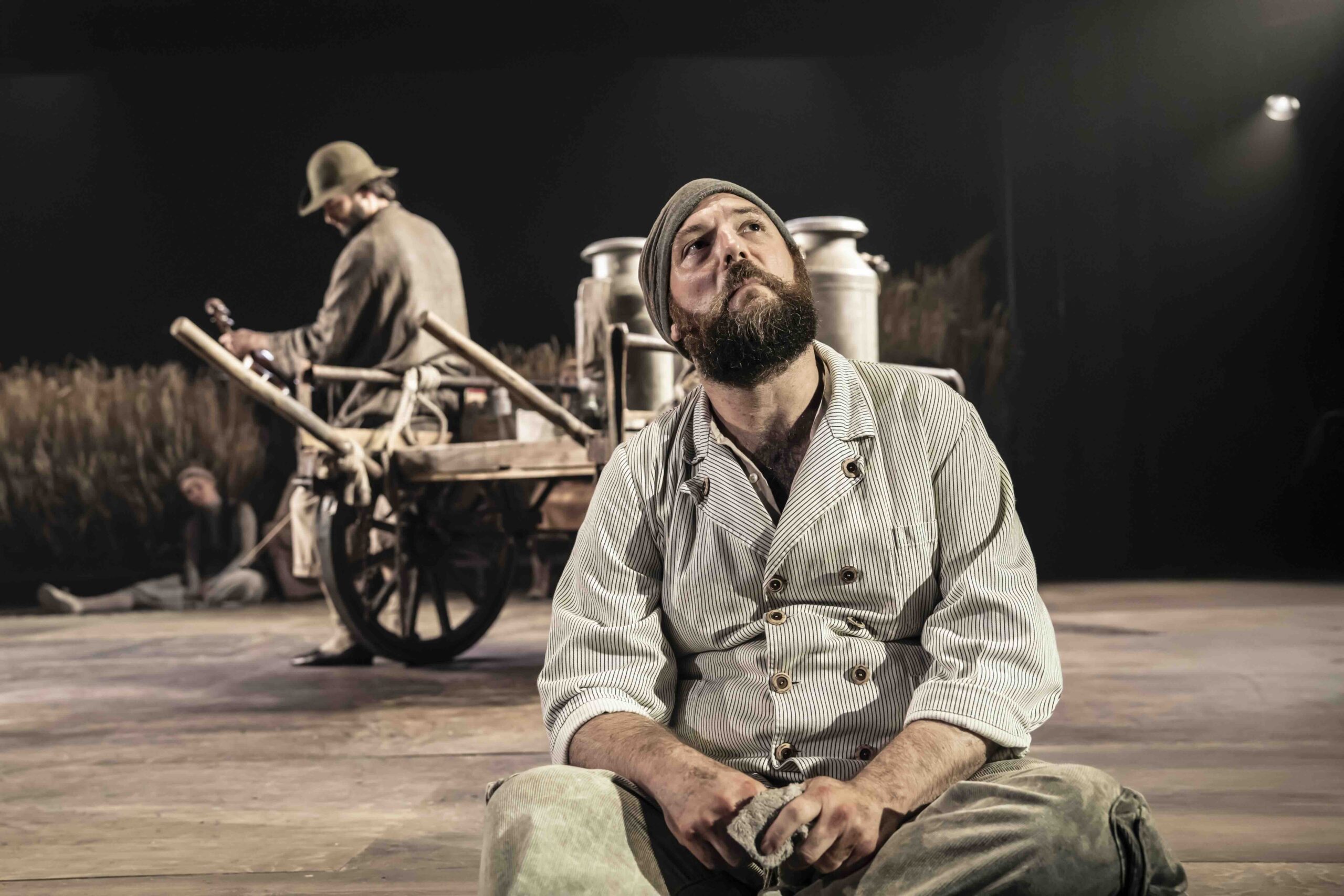
The second essential is the careful portrayal of Tevye’s relationship with his God. They have an intimate bond. Tevye opens his heart to God in a way he cannot do to his wife or daughters and the conversation is a two way one. It is a great highlight of the show. Fein dilutes that relationship by having Tevye deliver lines to the audience when they should go strait to God and nowhere else. His Brechtian notion of having cast members out-of-character sitting around the stage watching Tevye’s talks with God is very misplaced.
Tevye’s three daughters, Tzeitl, Hodel, and Chava (Natasha Jules Bernard, Georgia Bruce, and Hannah Bristow) show little development as characters. Already, in the show’s second number, Matchmaker, as they sing of their impending loveless weddings, – ‘It’s not that I’m sentimental/It’s just that I’m terrified’ – they display a confidence – a bolshiness – at odds with their trimerous position as young girls on the marriage market. In their headscarves and work clothes, each of them is the image of Rosie the Riveter. They have plenty of chutzpah, certainly, but with all that shouting and bawling, it is hard to feel much for them.
And speaking of Matchmakers, Beverly Kline as Yente is in a production all of her own: a kind of vaudeville act. She is loud and unsubtle. Dan Wolfe’s Motel, however, is pitch-perfect: gawky, enthusiastic, and loveable.
I really did enjoy Tevye’s dream sequence, played as a village-wide conspiracy to fool Golde out of her plans to see her daughter wed to an elderly butcher. But the break-up of the wedding itself by a small group of Russian soldiers was underwhelming (it takes more than four burley lads with shaved heads to represent the terrors of the Tzar’s militia).
The stage design was underwhelming (what is with those factory refectory chairs circa 1970?) and the costumes lacked cogency – like the spilt milk, they too were messy: a little bit 1900-ish, a little bit Russian-ish, a little bit Jewish-ish…
This production is full of energy, but lacking in authenticity. Fiddler on the Roof deserves better.
Until November 22
https://trafalgartickets.com/new-theatre-cardiff/en-GB/event/musical/fiddler-on-the-roof-tickets