Matthew Bourne has built a reputation on taking well-loved stories and reimagining them for the stage, and his version of The Red Shoes is a perfect example of that instinct at work. The original film, created by the celebrated partnership of Michael Powell and Emeric Pressburger in 1948, drew loosely on the darker fairy tale by Hans Christian Andersen. Their Technicolor masterpiece followed the rise of ballerina Victoria Page and the emotional and artistic pressures placed upon her by the formidable impresario Boris Lermontov.
Bourne’s stage adaptation, created for his company New Adventures, transforms that film classic into a piece of dance theatre that has become one of the company’s most enduring successes. Now returning on tour to the Wales Millennium Centre, the production arrives with a reputation for spectacle and storytelling, and it largely delivers on both counts.
Rather than using the original Oscar-winning score from the film, Bourne and orchestrator Terry Davies assembled a new musical landscape from pieces by the film composer Bernard Herrmann. The result is lush and cinematic, wrapping the production in sweeping orchestral drama that mirrors the emotional intensity of the story. At times, however, the surging romanticism of the score can feel almost too insistent, nudging the drama forward with a heavy hand and occasionally threatening to overwhelm the choreography beneath waves of orchestral intensity. The famous original score by Brian Easdale is absent, though the music here still reinforces the sense of melodrama and emotional excess that sits at the heart of the story.
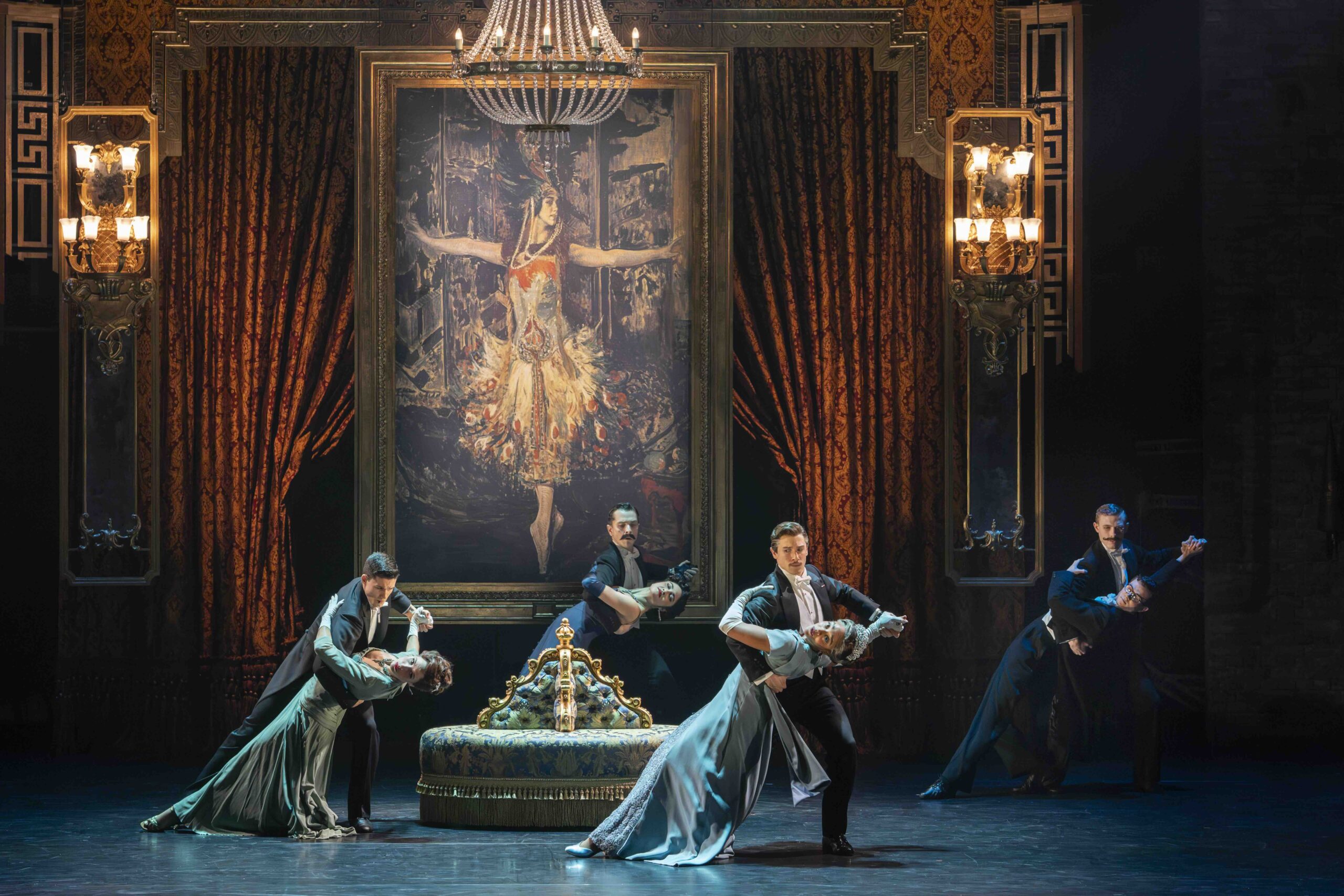
But this is Bourne, and ultimately the dancing is what commands attention. His choreography strikes that delicate balance between accessibility and sophistication, allowing the performers to display both technical finesse and expressive storytelling. The ensemble numbers fizz with energy, borrowing freely from mid-century dance styles, think the cinematic sweep of Gene Kelly and Leslie Caron in An American in Paris or the sharp theatrical flair of Bob Fosse’s The Rich Man’s Frug in Sweet Charity. These influences blend smoothly with classical ballet vocabulary, producing a movement language that feels both playful and polished.
At the centre of the drama stands Victoria Page, danced by Hannah Kremer with a compelling mixture of fragility and determination. She captures the emotional pull between ambition and affection with admirable subtlety. Opposite her is Boris Lermontov, the imposing ballet impresario, danced by Reece Causton. With cool authority and controlled presence, Causton commands the stage even in stillness, embodying a man whose power lies not only in his status but in the psychological hold he exerts over his company.
Completing the central triangle is Julian Craster, the struggling composer, danced by Leonardo McCorkindale. His quieter presence offers an emotional counterbalance to Lermontov’s dominance, and the tension between the three characters forms the dramatic backbone of the production. Through movement rather than dialogue, the ballet explores the painful clash between artistic devotion and personal happiness, or perhaps more accurately, the selfishness that ambition can demand.
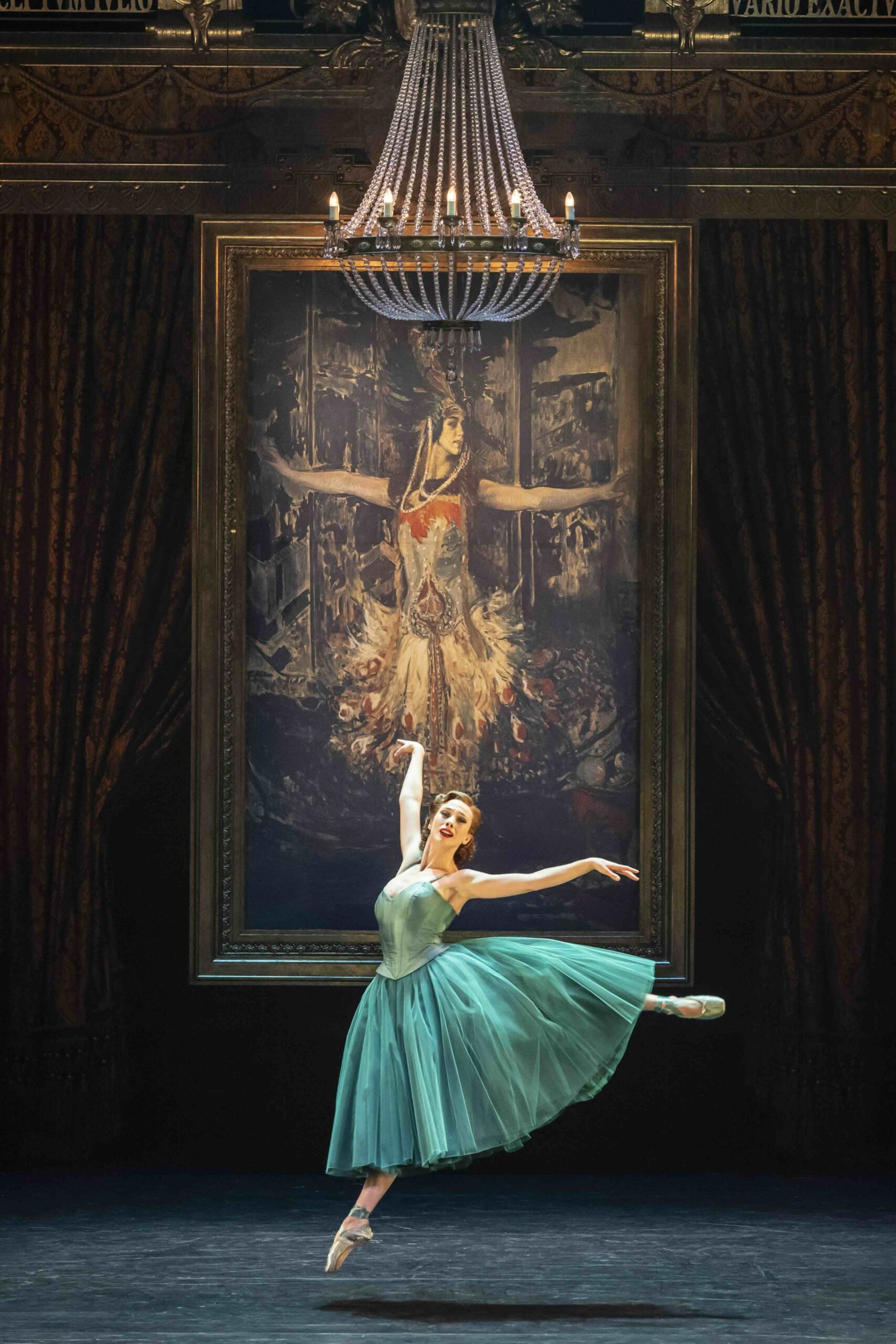
Visually, the production is consistently striking. Lez Brotherston’s designs conjure a stylised 1940s Europe, shifting elegantly between rehearsal rooms, theatre stages and the glamour of Monte Carlo. Much of the imagery remains faithful to the original film but is translated cleverly for the stage. The central “Red Shoes” ballet sequence is particularly effective, using stark black-and-white staging so that the crimson shoes burn vividly against the monochrome world around them. The climactic train sequence, both literal and symbolic, is also realised with impressive theatrical clarity.
Narratively, the story follows a well-worn dramatic path. A young woman forced to choose between love and the seductive world of powerful men is a trope that runs through works such as Moulin Rouge!, La Bohème and La Traviata. These stories rarely end happily, and The Red Shoes is no exception. Here the intoxicating force is not romance or wealth but dance itself, an all-consuming devotion to art. It is not difficult to imagine the same narrative recast in a contemporary setting, where the shoes might represent any number of modern obsessions or addictions.
Bourne embraces symbolism wholeheartedly. The red shoes themselves operate as one giant theatrical metaphor, embodying the irresistible pull of ambition and artistic perfection. The train crash that shadows the narrative becomes another stark image of inevitability, a collision between desire, pressure and fate.
For all its elegance, the production occasionally reveals some familiar Bourne signatures. The choreographer’s fondness for camp, faintly comic gay male characters surfaces again here, flitting around the edges of the ballet company with playful flamboyance. It has become something of a Bourne hallmark, affectionate perhaps, but also a device that now feels slightly predictable.
There are also moments when the narrative momentum falters. While the storytelling is largely clear, there are points where the audience seems uncertain how to respond. During the “play within a play” sequence in the central ballet, applause erupted at what appeared to be the internal curtain call, suggesting that the layering of performance and narrative was not entirely clear to everyone watching.
The pacing contributes to this unevenness. The first act stretches out to the point where it feels longer than it actually is, while the second act passes comparatively quickly, resolving the emotional conflict with surprising speed.
Yet when the production finds its rhythm, it remains deeply absorbing. Bourne’s affection for The Red Shoes is unmistakable, and the piece succeeds in capturing the spirit of Powell and Pressburger’s film while translating it into a fluid language of contemporary dance theatre.
Ultimately it is the quality of the dancing that anchors the evening. When the company moves together with full force, Bourne’s choreography carries a sweep and confidence that explains why this production has endured. Like the enchanted shoes themselves, it continues to move forward, sometimes unevenly, but always with a certain irresistible theatrical energy.
Until March 7