Welsh artists Alex Harvey and Emily Steel talk about two shows they are taking to the Edinburgh Fringe this year: Collaborator and How Not to Make it in America
Collaborator
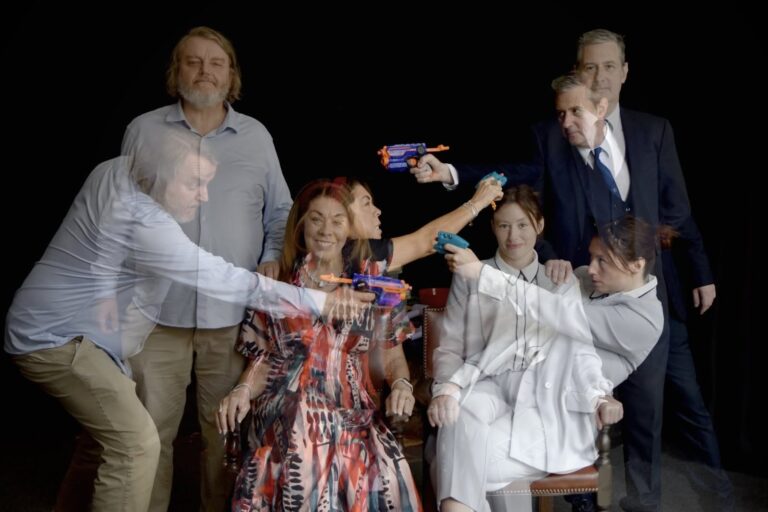
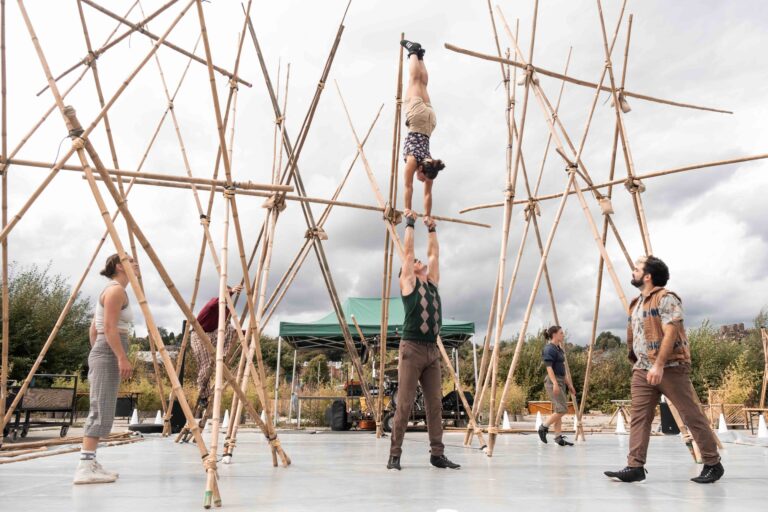
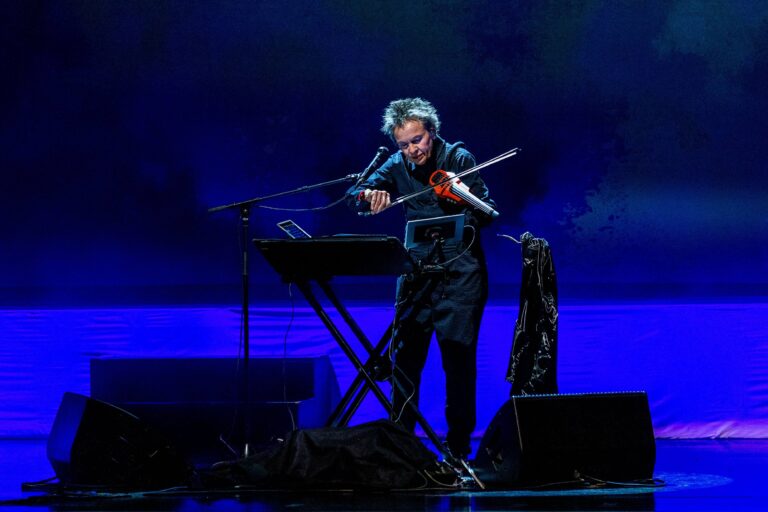
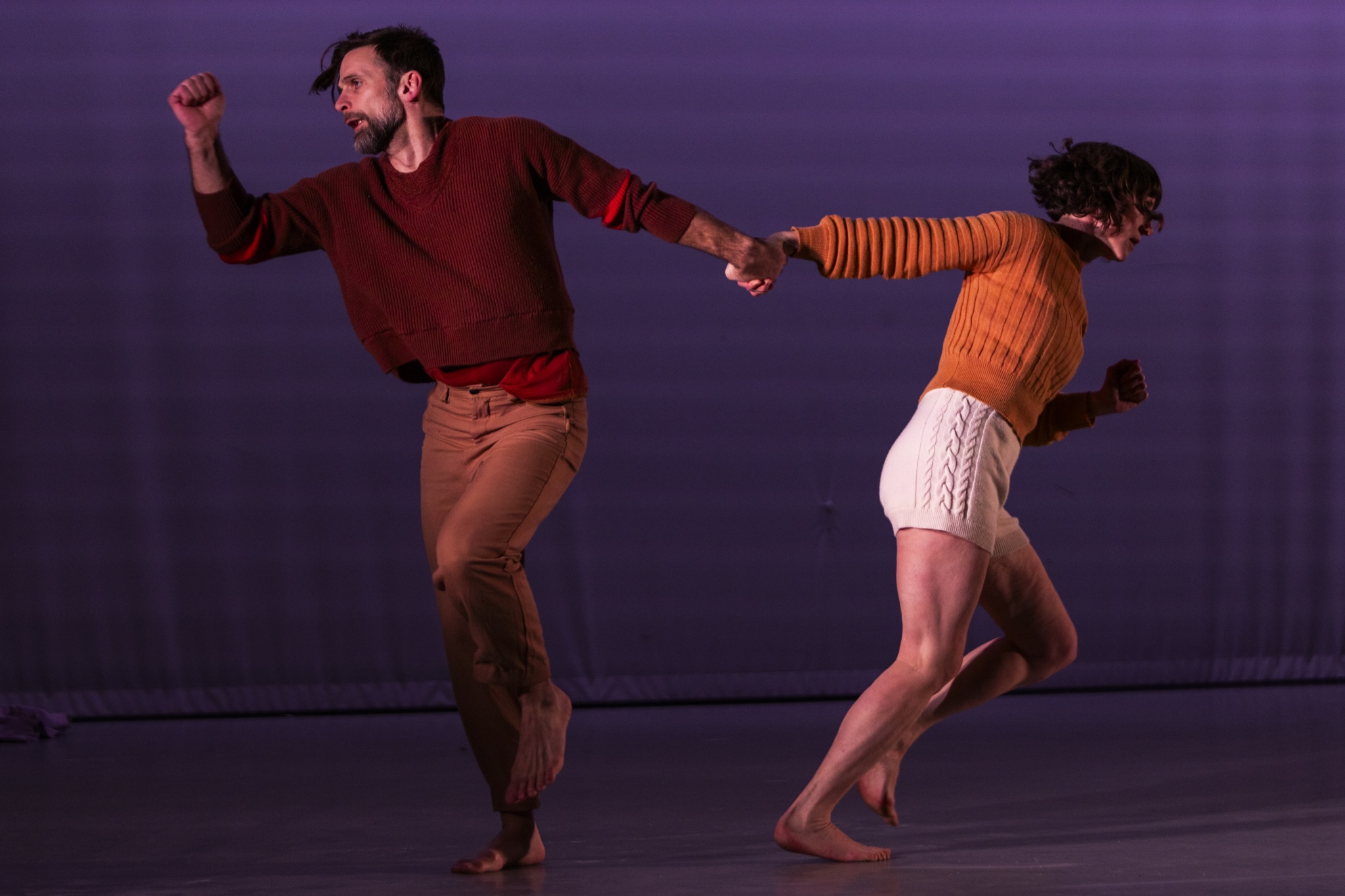
Ockham’s Razor return to the Fringe for the first time since 2019 with this intimate duet, crafted and performed by South Wales’ Alex Harvey and Charlotte Mooney. Featuring these two performers, a suspended metal frame and a stage, Collaborator is an irreverent, highly physical and heartfelt dive into the negotiations involved in making something: a decision, a work of art, a life. It celebrates creation, compromise and enduring partnership. Collaborator is the story of the balance, trust and frustration that shape any partnership. Pleasance at EICC (Pentland) from Thursday 6th toSaturday 22nd August (not 12th, 19th) at 17:00.
Alex Harvey:
“Collaborator is a show about making circus work and a life with someone.
“Charlotte & I met at Circomedia – a circus school in Bristol where we were both studying in our early twenties. We fell in love and vowed that we would never make work together! Circus couples around us always seemed to be arguing in training and then they would inevitably break up. However, over time, we discovered that we were really inspired by all the same work. Once we started training together we found that we loved inventing new movement with doubles trapeze. We sort of casually, playfully made our first piece together and to our great surprise it won a French funding competition in Paris which gave us the opportunity to tour it and gave us some money to make more work.
“We started a company and called it Ockham’s Razor after a philosophy by William of Ockham. He said that if you have two theories to explain a possible problem the simplest will most likely be one to trust. The philosophy is called Ockham’s Razor because it’s about cutting away unnecessary details. We chose it as the name of the company as this simple approach really appealed to us. We use the movement of circus to tell the stories that are inherently in there and try not to put in extra and unnecessary tricks. We have also always been drawn to a really simple design aesthetic with only a few things on stage used imaginatively. However, over the years the irony has not been lost on us that’s it’s a very complicated way of saying keep it simple.
“This simple approach has really stayed with us. We said at the beginning that we want to make circus from the vulnerability, trust and reliance that exists between people doing such potentially risky work. It’s about human connection.
“For the last twenty-two years we have been making and touring shows together and now we are married and have a child… and this is wonderful and has also made life a little less simple. While our daughter was little it was fun to perform in shows and have her with us on the road. But there came a time where she craved more stability so we began to direct shows rather than perform in them so we could be at home more. We were very happy as we also love directing.
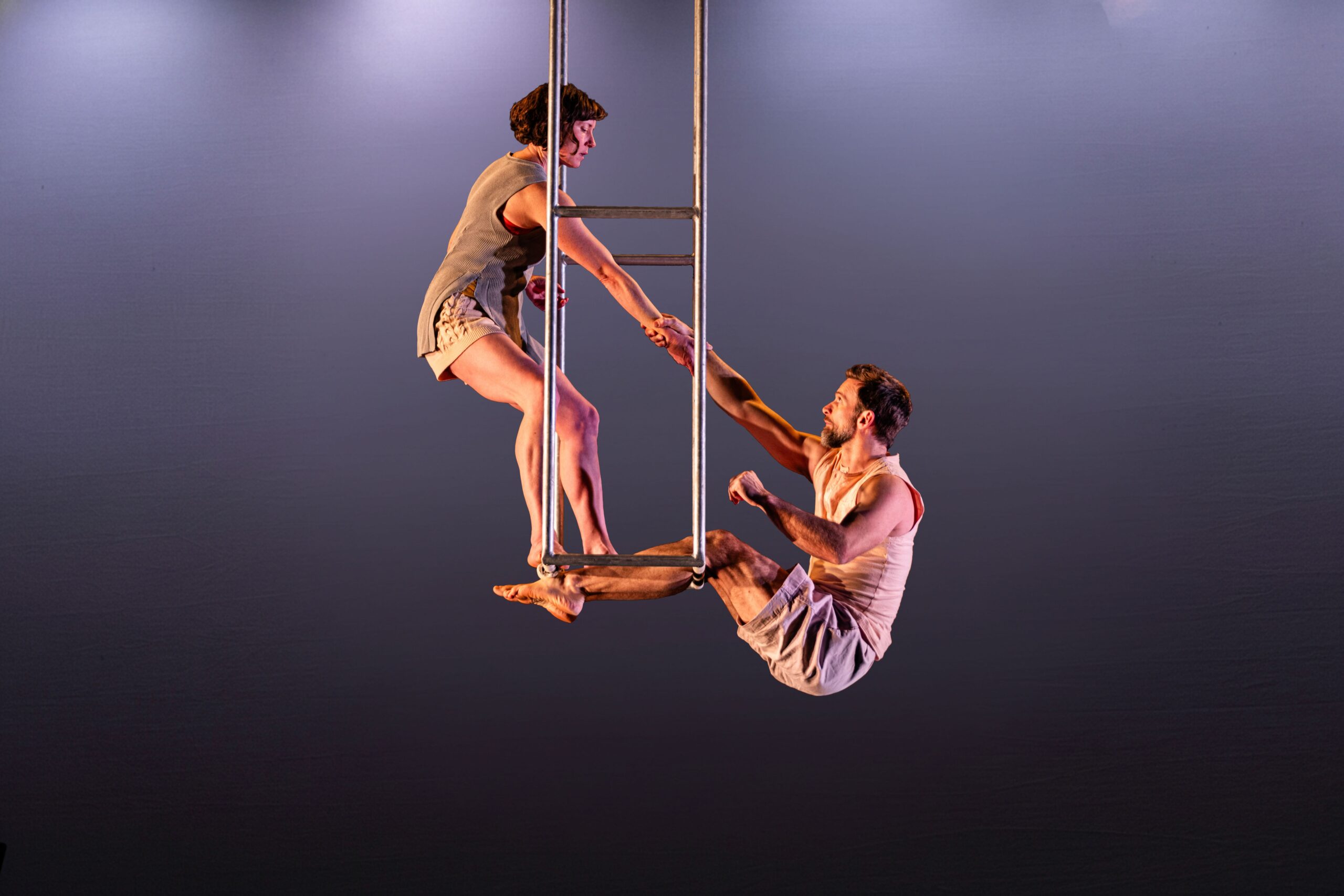
“Then someone asked us if we had retired from performing and we realised that we had never made a conscious decision to do that. It had just happened. It struck us both as immeasurably sad if we would never perform doubles trapeze together again; never have that relationship of ridiculous trust in the air. So we decided to make one last show as a sort of experiment to see if we wanted to keep performing or make our peace and consciously stop. And this is Collaborator.
“We weren’t sure where to start but our relationship and shared history seemed like a good place. We began by writing lists of all the dynamics between us including the things that drive us insane about each other and all the vulnerable dynamics that come up in creation : “am I the dead wood here?”, “if you loved me you’d love my idea” etc. The amazing thing was that this could have been really risky and ended in a giant fight but it didn’t. In fact it was truly cathartic. There is something powerful in giving air to our darkest thoughts – we laughed so much. It’s been a really beautiful and funny process to talk to each other really honestly about our working dynamic and to try and be really true in what we put on stage. We took those dynamics as starting points for movement, trapeze choreography, stories and the visual elements of the show.
“With the aerial elements we looked at the process we have been through building trust and developing a shared language. We always innately had immense trust in each other physically but certainly over the years this has deepened. We know each other’s bodies now so well and how they move – I can feel on a sort of a cellular level how much force Charlotte is giving to a movement how much I need to brace against it.
“When we work with other performers, both as directors and performers ourselves, we spend a lot of time working on building trust as something that has to exist in all aspects of the relationship. We have lots of practices in our rehearsal rooms to help the company build kindness and respect and over the years this has become a focus for us outside of the rehearsal room too.
“We also thought a lot about risk and how our relationship to it has changed. Not necessarily as we grew older (we are both 47 now) but more once we had had our daughter. It enters your head that there are some tricks now that are simply not worth it. We have a greater incentive to go home safe and well at the end of the night.
“The show came together in parts – like a collage. Stories, aerial duets, movement, kinetic sculptures all fit together. Each Friday we would invite in an audience and show what we had made and see what they saw within it. This was so helpful as we discovered that the meaning and tone of the piece from funny to moving would massively shift depending on quite small shifts in material placement. We wanted to make sure that the piece wasn’t just personal that it could resonate with the audience’s own experiences of navigating relationships, that it would feel recognisable. It also helped us make bold decisions. There’s no way we would have been brave enough to trust that this would make sense and read emotionally with out those helpful Fridays.
“It’s a very personal show to us, but it has dynamics that anyone who has navigated a relationship will recognise. Ultimately it’s a show about building trust, accepting flaws and freak outs, just carrying on when you’re infused with doubt, not battling against each other but using each other’s energy to carry you both forward. It’s funny, heartfelt, raw and hugely physical.
“We’ve only performed it a few times so far and there’s been an incredible buzz about it so we’re really excited to be taking it to the Fringe. We’ve been up to the festival quite a few times and the thing we love is that you get to be part of a community of artists.
“It’s always feels so great to be part of biggest gathering of performance in the world.”
How Not to Make it in America
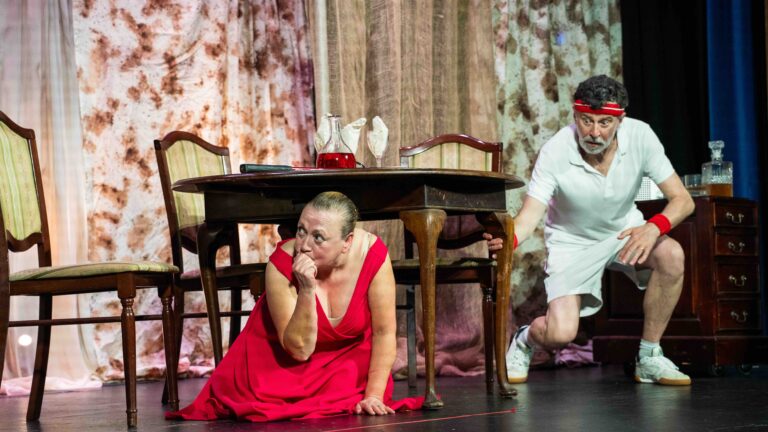
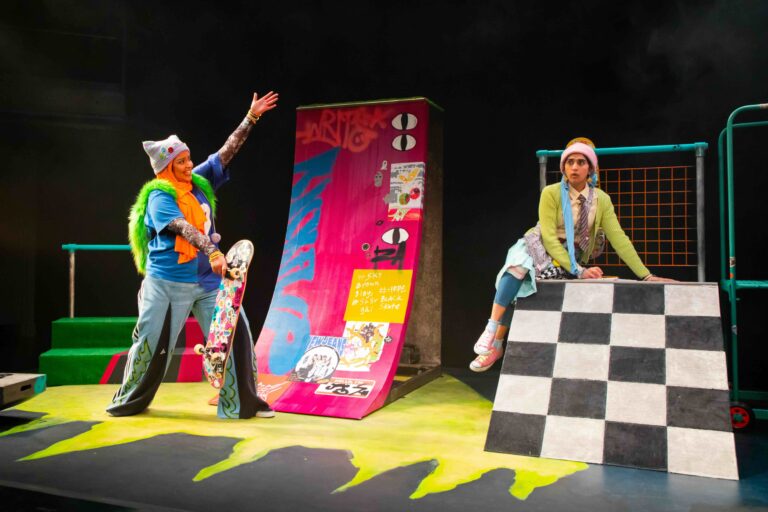
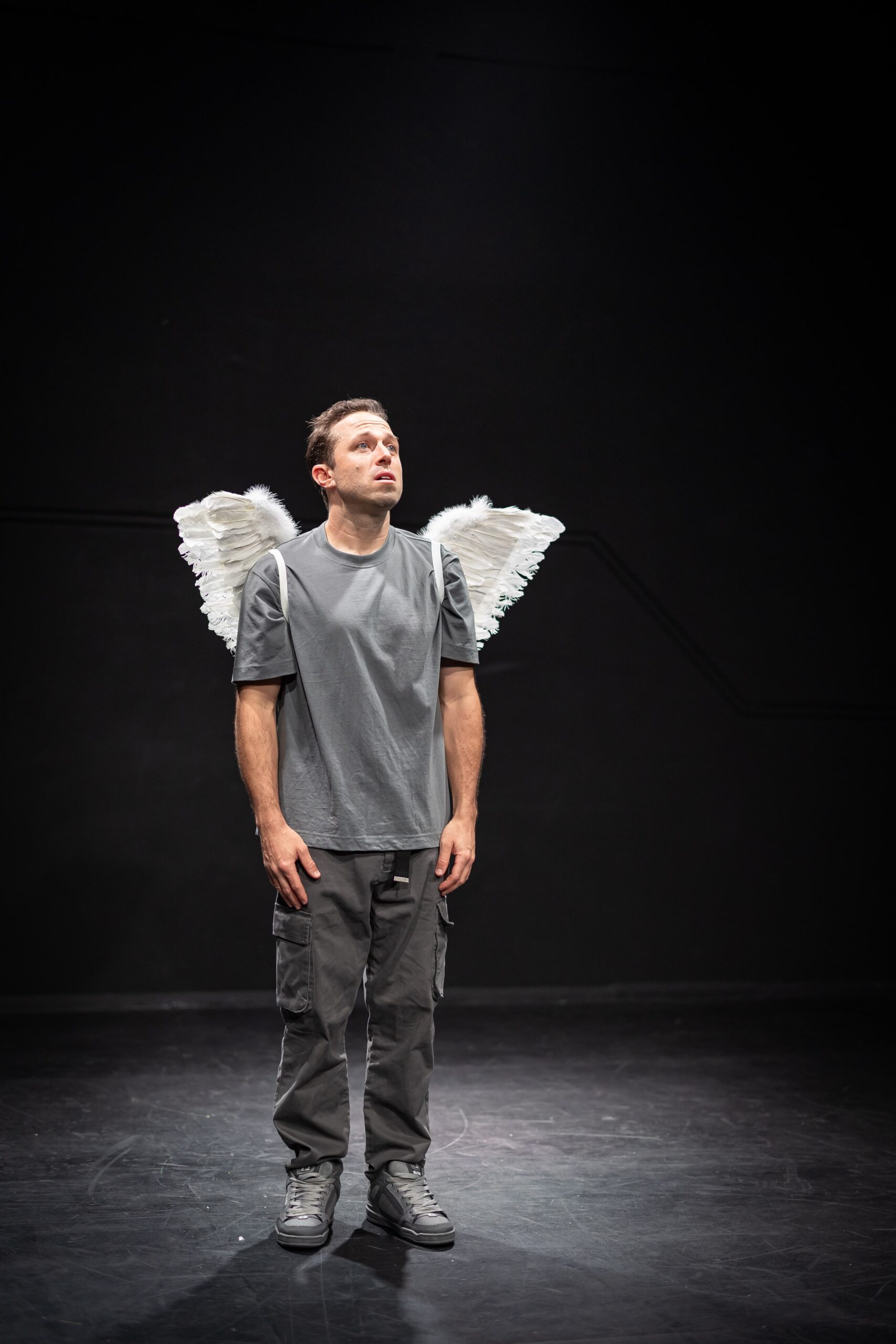
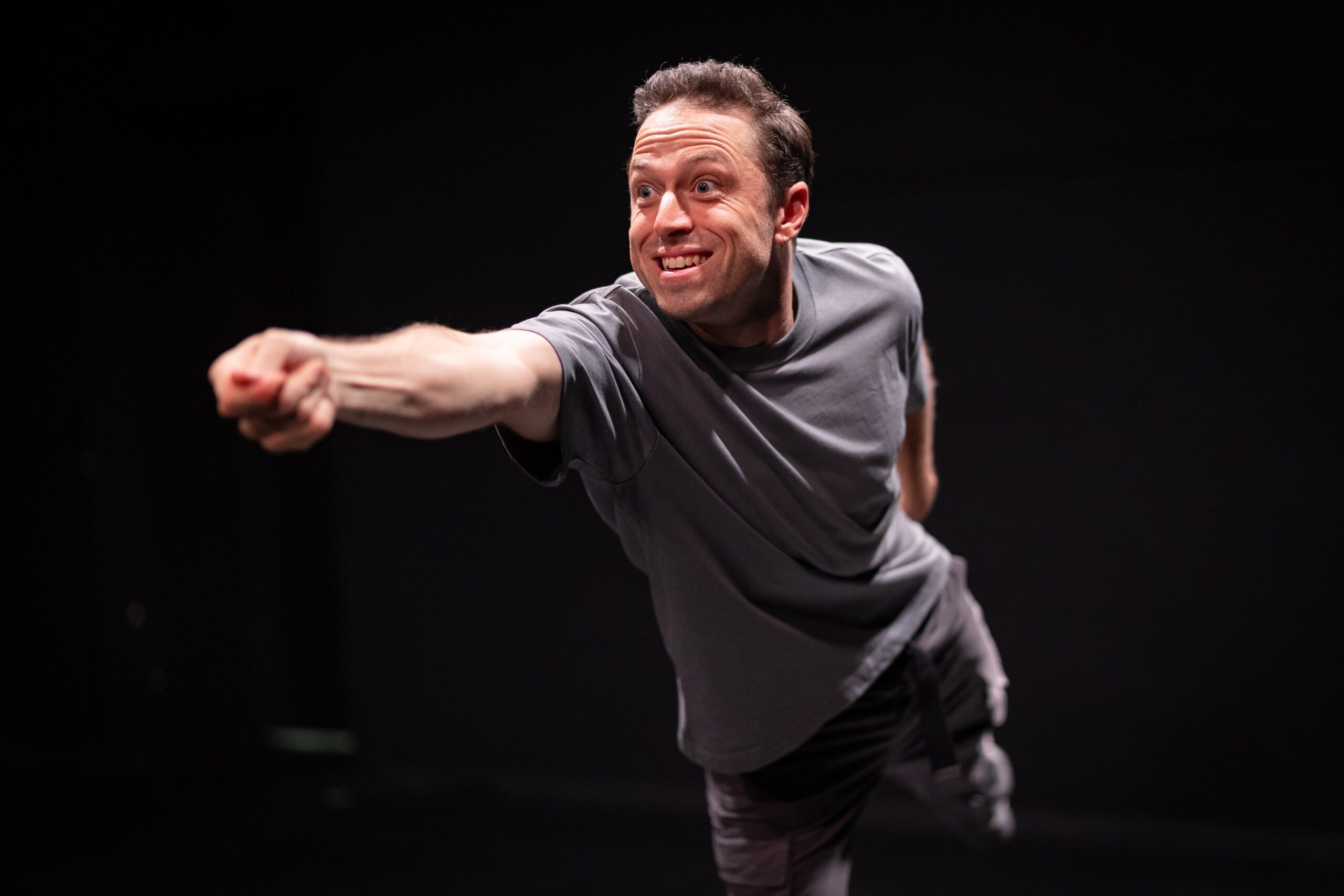
It’s 2001. A naive young Australian actor arrives in New York, full of ambition and chasing the dream. Twenty-five years after September 11th changed the world, this is a gripping, darkly funny, story of survival, ambition and disillusionment inspired by Cardiff playwright Emily Steel’s experiences. Performer James Smith plays twenty-eight characters, bringing to life a kaleidoscope of personalities that capture the chaos, absurdity and emotional fallout of a life derailed and reshaped. Part of the House of Oz Edinburgh 2026 season. Summerhall (Former Gent’s Locker Room) from Thursday 6th – Monday 31st August (not 17th, 24th) at 21.20
Emily Steel:
In August, I’ll be bringing my show How Not to Make it in America to Summerhall at the Edinburgh Fringe. It’s about a naive, young Australian actor who moves to New York in 2001 to try and make it there – but then 9/11 happens, his high school sweetheart dumps him and he finds himself working illegally in a video store. It’s funny, it’s moving, and it’s inspired by my own experiences – I was a naive, young Welsh actor who moved to New York in 2001 and I didn’t make it there either! I’m now a playwright living in South Australia – so the story in this play has made its way around the world.
“I was born in Cardiff and grew up in Sully. In my teens I acted in Shakespeare and Brecht at Llanover Hall and performed at the Sherman Theatre. I left Wales to go to uni and then drama school, and in 2001 I moved to New York with my then-boyfriend. He, sensibly, had a job to go to and a work visa. I, much less sensibly, had neither of those things. I probably thought I was going to get a part in a play, get discovered as an actor and then someone would sort out the paperwork for me. Yeah… it didn’t happen like that.
“In my first few weeks in New York, I saw shows on Broadway and at tiny independent theatres like the Flea. I slept in the street outside the Public Theatre to get tickets to Shakespeare in the Park (which was actually Chekov’s The Seagull that year, with Meryl Streep and Philip Seymour Hoffman). New York was exciting and overwhelming and seemed to be full of people who would barge past you on the sidewalks and let shop doors swing shut in your face. By early September, we’d barely found an apartment or furniture, much less a TV or a phone. On the morning of 9/11 my then-boyfriend left for work. An hour later he walked back in through the door and said his office had been evacuated because, “Someone’s flown a plane into the Twin Towers.” My first, inappropriate reaction was to laugh – out of surprise, I think.
“We didn’t know what was happening. We went down to the street in Midtown, where no one else seemed to know what was happening either. There were no smartphones to show us news or videos. We gathered with a group around a hotdog stand, listening to the radio and watching smoke fill the sky above the skyscrapers. As the scale of what had happened became clearer, we tried to phone home to let our families know we were okay – but we had to use a payphone and the phone lines were overwhelmed. I couldn’t get through to my parents – the only person I managed to reach was my Nan, in Penarth. When I finally spoke to my dad the next day, he said when she told him she’d spoken to me, he was afraid she’d imagined it.
“For a while after that, New York felt unnervingly quiet. I, not having personally seen the people jump or the Towers fall or having run from the dust and ash, maintained that 9/11 hadn’t had much effect on me. But of course it had. I broke up with my boyfriend, I went a bit wild, I spent the next few years doing off-off-Broadway shows for no money, sleeping on friends’ couches, going back to Wales when my tourist visa ran out and working in pubs until I’d made enough for my airfare back again. It was in New York that I started writing plays – my very first short scripts were staged in a little festival on 42nd Street. I sent one of them to Sgript Cymru, they sent me on some playwriting courses in Wales, and my first short play commission was presented at the Sherman.
“The rest, as they say, is history. Now I live in Adelaide, South Australia, with my partner (who’s from Swansea) and our two Welsh-Australian kids. My plays have been producedby State Theatre Company South Australia and my most recent play, Housework, will be on at the Sydney Opera House in September as part of the Sydney Theatre Company season. A few years ago, I had a conversation about being in New York on 9/11 with Corey McMahon, who was then the Artistic Director of Theatre Republic. Corey asked if I thought there was a play in that. He commissioned How Not to Make it in America and we developed it with fantastic Adelaide actor James Smith – having worked with Jim before, I knew what he was capable of, so wrote a play where he would play twenty-eight characters, with multiple accents and time jumps. He nailed it. The protagonist is not quite a male version of me, his story is fictional, but the details of the world are authentic, inspired by things I saw and did in New York. Last year, I took over as Artistic Director of Theatre Republic, and we brought How Not to Make it in America to the Adelaide Fringe, where it won the House of Oz Purse Prize, which is supporting us to bring it to Edinburgh. I’m excited to stage the show only four hundred miles from my home soil – compared to Australia, it’s practically next door”.
Collaborator images by Jamie Dennis
How Not to Make it in America images by Jamois