There is something comforting about returning to Agatha Christie. The moment you step into a Christie story, you know the shape of what awaits: superficial elegance disturbed by violence, civility crumbling under human passions, a sense of place and time – and always a detective deft enough to reassemble the pieces. In Ken Ludwig and Lucy Bailey’s new staging of Death on the Nile, that essence is preserved even as the production takes some bold liberties with the original novel. What emerges is a show that understands the pulse of Christie.
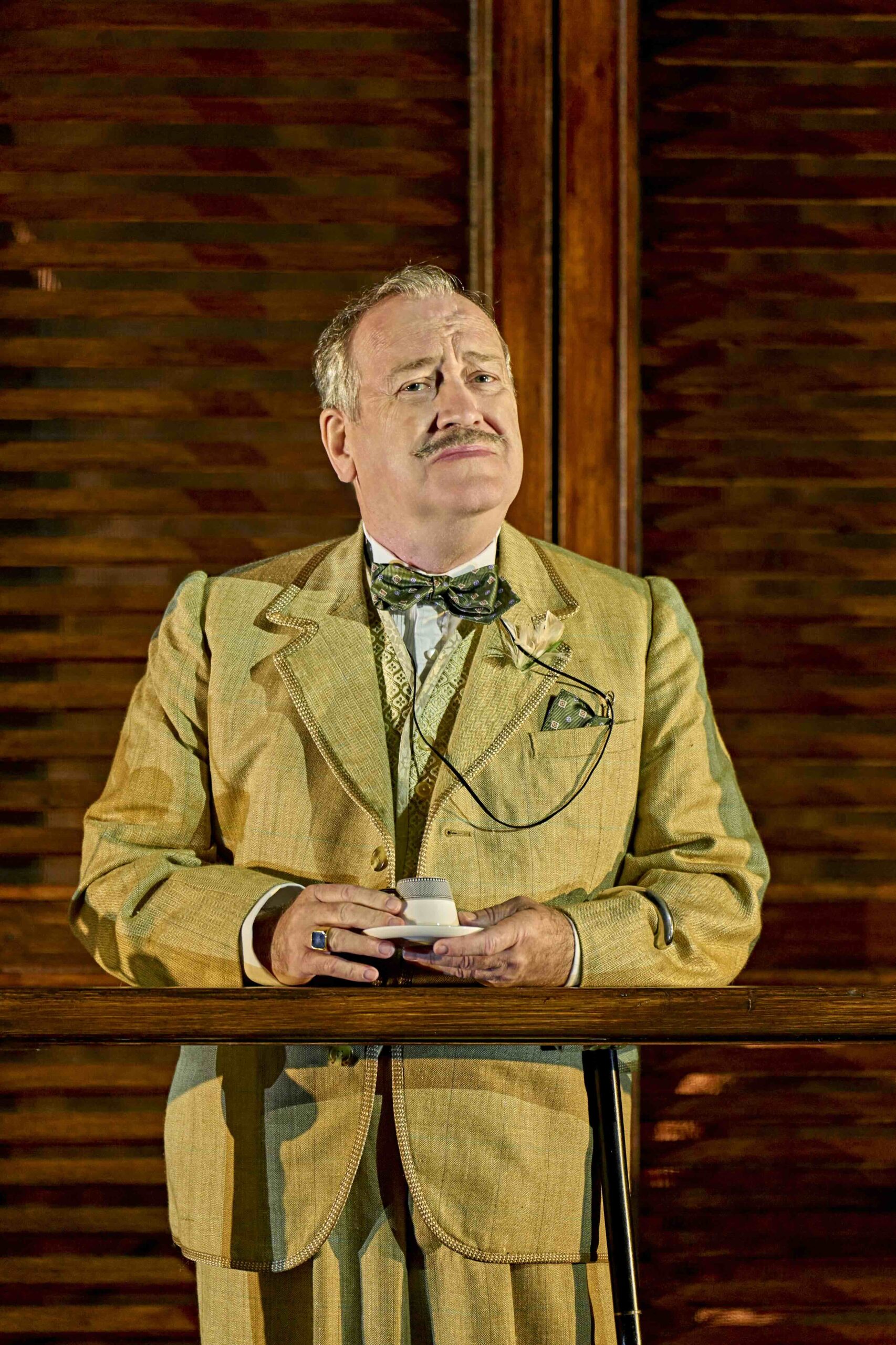
Mark Hadfield
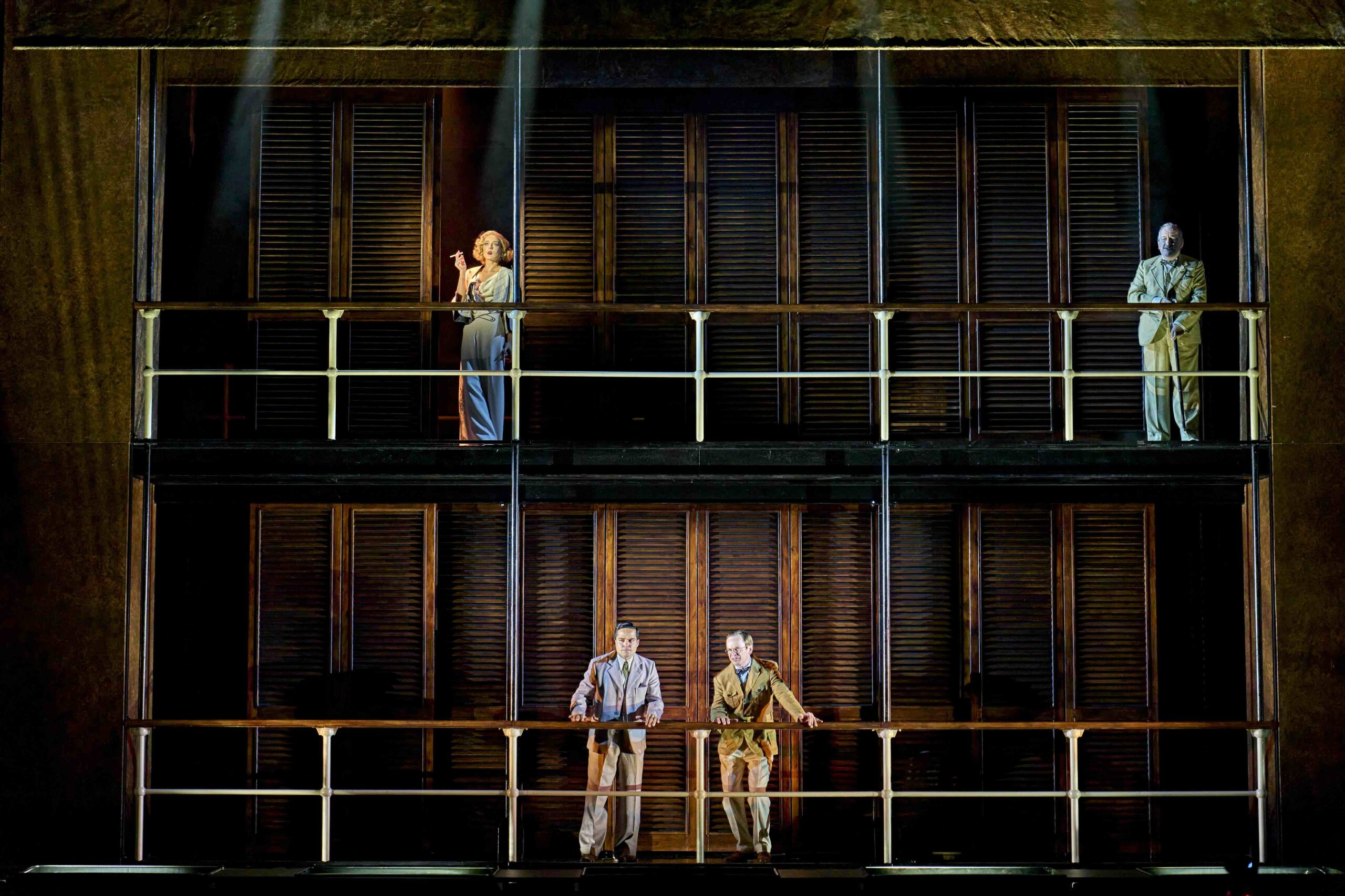
Before anything else, one must speak of the staging. Mike Britton’s set is not simply effective; it is the backbone of the production, the vehicle that carries the audience from London to Egypt with a level of ingenuity. An adaptable two-storey structure that folds, slides, and reframes itself into a number of environments. The transformation from the polished austerity of the British Museum to the languid luxury of the steamer is accomplished with smooth restraint. Curtains glide, panels reposition, shadows recompose themselves, and suddenly we are by the Nile, lulled by the suggestion of lapping waters and reflections. Okay, so we could be on any waterway as we see nothing of Egypt but there was enough to give a vaguely exotic feeling.
Ludwig reduces the body count to a single murder, a choice that will undoubtedly raise eyebrows among purists. I could have lived without the addition of a mummy sarcophagus being returned to Egypt and the rather daft scene where the ultimate victim gets trapped in it – presumably replacing the falling rock at Abu Simbel episode from the novel.
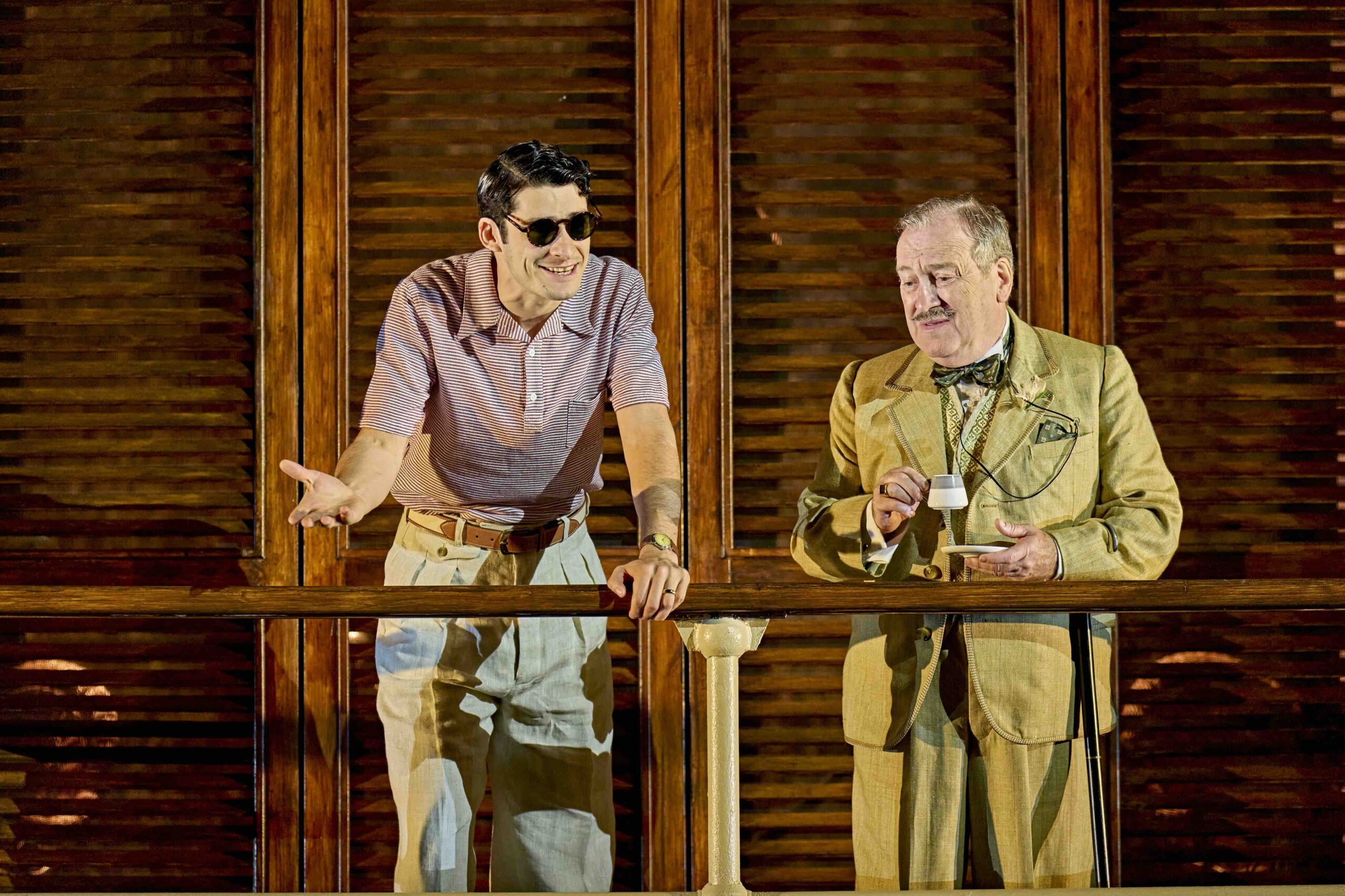
Nye Occomore and Mark Hadfield
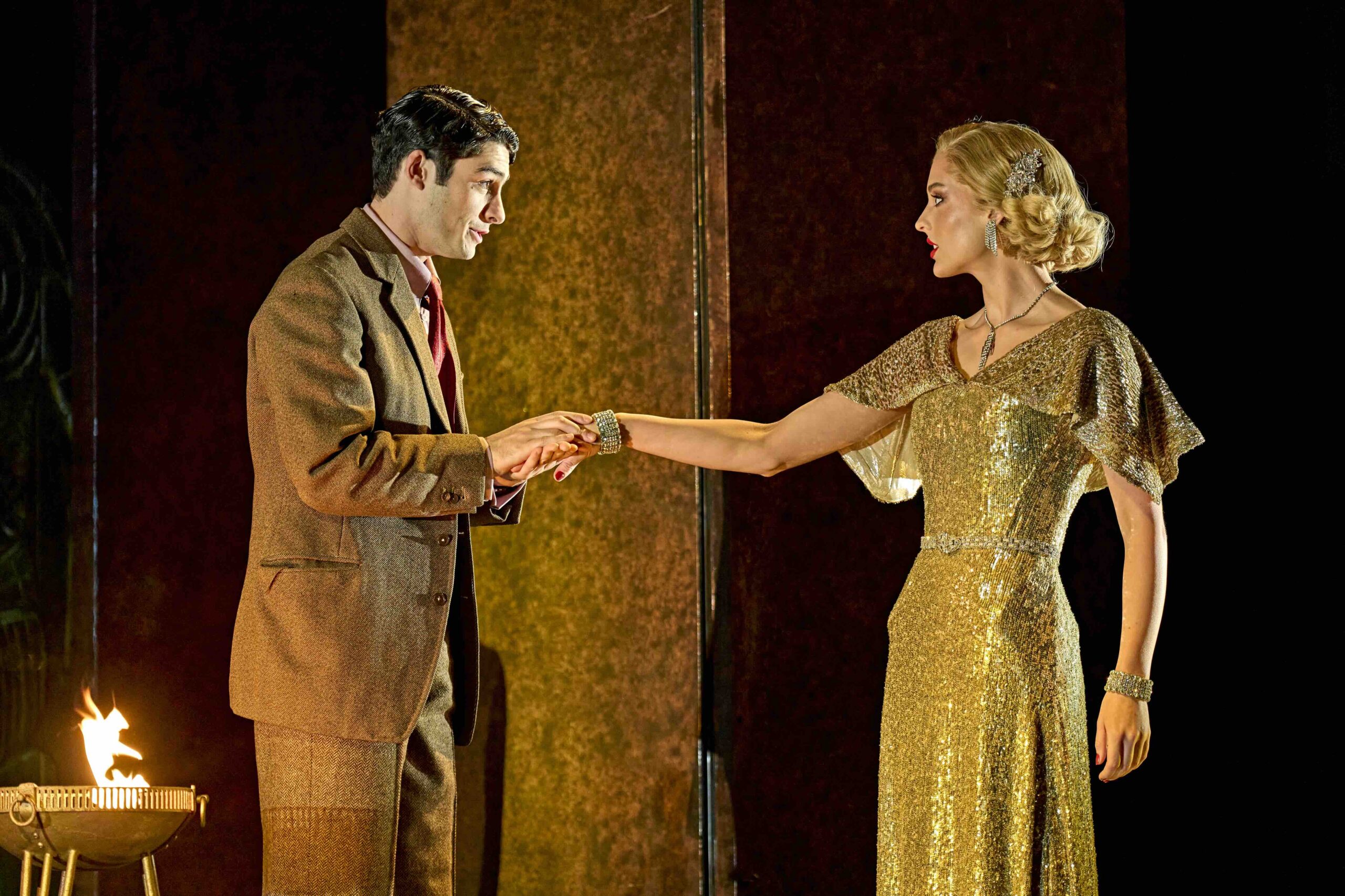
Nye Occomore and Libby Alexandra-Cooper
Much of the tension in the novel derives from its mounting sense of peril, from the psychological pressure that builds as deaths accumulate. With only one killing, that creeping dread naturally softens. It makes for a far simpler, possibly too simple story, and the solving of the murder is pretty clear well before the not particularly compelling denouement explanation.
However, Bailey’s direction remains clean and attentive, sensitive to pace and tone. Characters are allowed to develop before our eyes, and although not every portrayal is equally nuanced, there is an overall sense of ensemble cohesion that carries the evening.
Mark Hadfield’s Poirot is not a mimic of past giants, nor does he attempt to reinvent the detective. Instead, he gives us a Poirot who feels lived-in: quietly amused, gently self-conscious, and unexpectedly warm. It is a recognition that Poirot’s brilliance is inseparable from his humanity, that his method is not only about logic but about a relentless interest in the minds of others. Hadfield captures this with understated charm. His sidekick here is Colonel Race, played by Bob Barrett, as an old school MI5-type, who is rather brighter than he lets on.

Glynis Barber’s Salome Otterbourne and Terence Wilton’s Septimus Troy are delightful in their eccentricity. There is also much humour and charm from Nicholas Prasad as the shy Ramses Praed and Camilla Anvar as Rosalie Otterbourne who is overshadowed by her glamourous mother Salome. Ramses father’ Atticus Praed is well taken by Howard Gossington as a nervous academic but who is capable of outbursts of bitter anger. Helen Katamba plays Annabelle Pennington as always on the verge of panic to get papers signed by her client Linnet Ridgeway. Played by Libby Alexandra-Cooper, she is the beautiful heiress who has married Simon from under the nose of Jacqueline de Bellefort, convincingly played by Esme Hough. These two actresses shine in their roles, effectively contrasting their social backgrounds, personalities and relationships with Simon. Nye Occomore makes for a convincing Simon, smooth and handsome, and ultimately shallow and weak.
What remains most striking is how the show navigates the heavy legacy of its predecessors. Ludwig and Bailey are well aware that many members of the audience walk in with decades of Christie imprints, particularly cinematic. Instead of competing with the lavish nostalgia of the wonderful 1978 film or the less successful Branagh adaptations, they concentrate on a simplified story, sharp dialogue, focus on interactions wrapped in an aura of greed, jealousy, revenge, and dangerous passions.
In short: a thoughtful, atmospheric, and quietly compelling voyage down the Nile, but undeniably Christie and enjoyably engaging.
Until November 29
https://trafalgartickets.com/new-theatre-cardiff/en-GB/event/play/death-on-the-nile-tickets