***
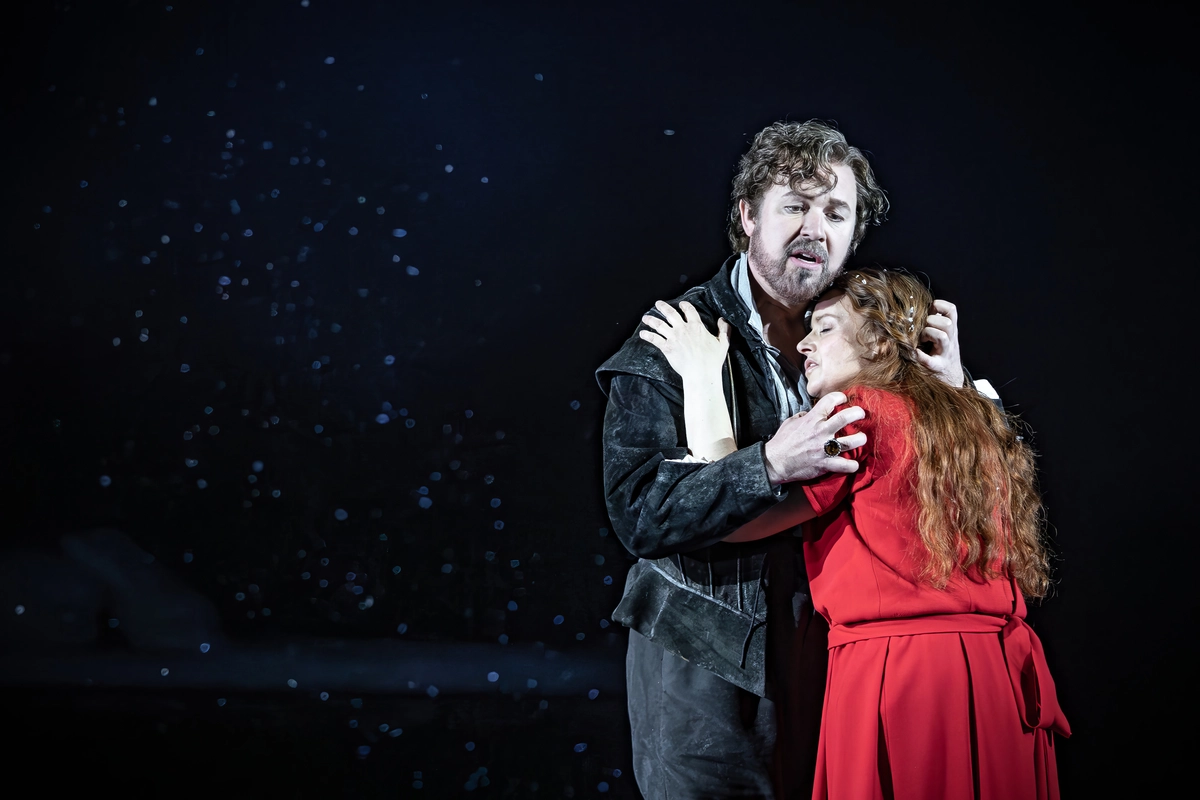
Welsh National Opera’s latest staging of The Flying Dutchman continues a now-familiar operatic vogue: the displacement of the titular male figure in favour of a focus on the female lead.
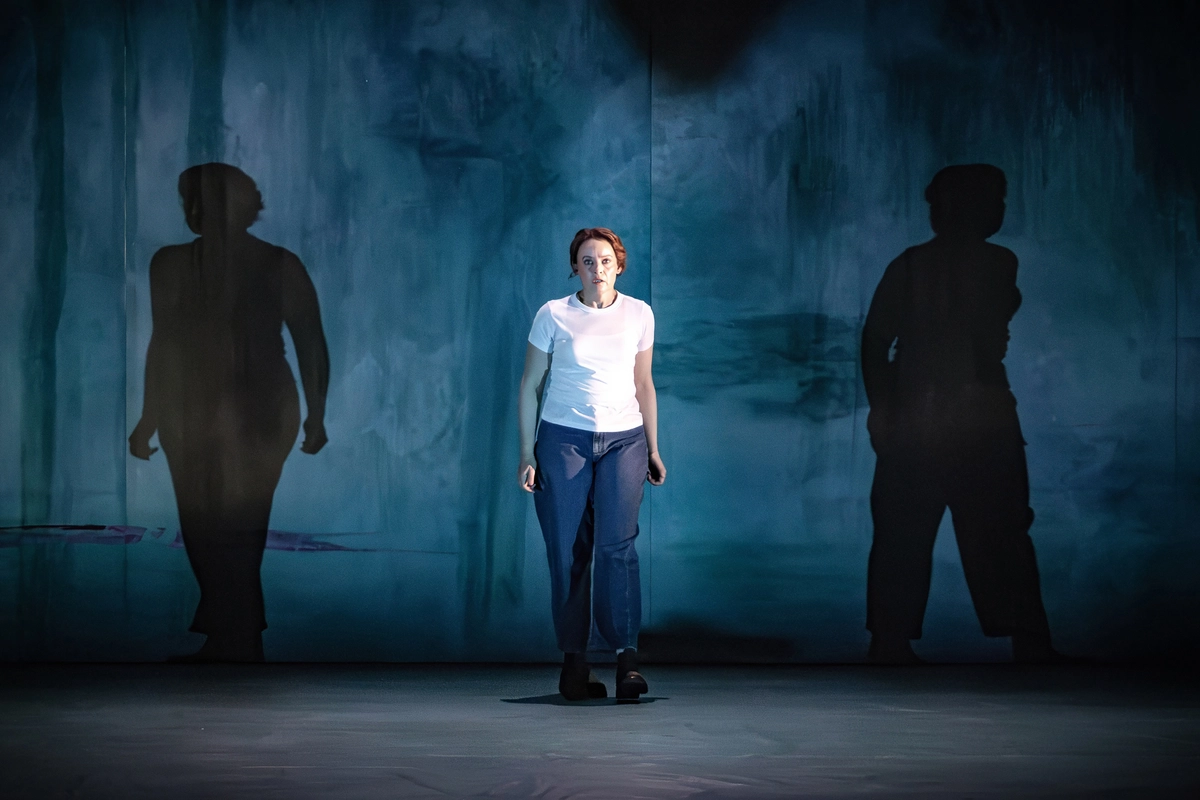
Rachel Nicholls
In Cardiffian director Jack Furness’s production, the Dutchman is no longer the axis of the drama. Instead, Senta becomes its gravitational centre, less Wagnerian redeemer than case study in psychological damage. The framing device, introduced during the overture, is unequivocal: a child is born and then as a child (in a red dress) is traumatised by the apparent death of her mother (suggestively staged with hospital imagery that hints at cancer), condemned to circle her past in obsessive repetition. By the close, that same figure (back in her red frock) collapses and is wheeled off on a hospital bed, the opera having traced not a mythic curse but a private breakdown. This of course mirrors the Dutchman’s own eternal cycle.
Wagner’s dark tale is based on the legend popularised by Heinrich Heine, and apparently his own experience of a sea storm on the Baltic, when the Dutchman can only come ashore every seven years in the hope of finding redemption in the form of a woman who will be faithful until death, and break his curse.
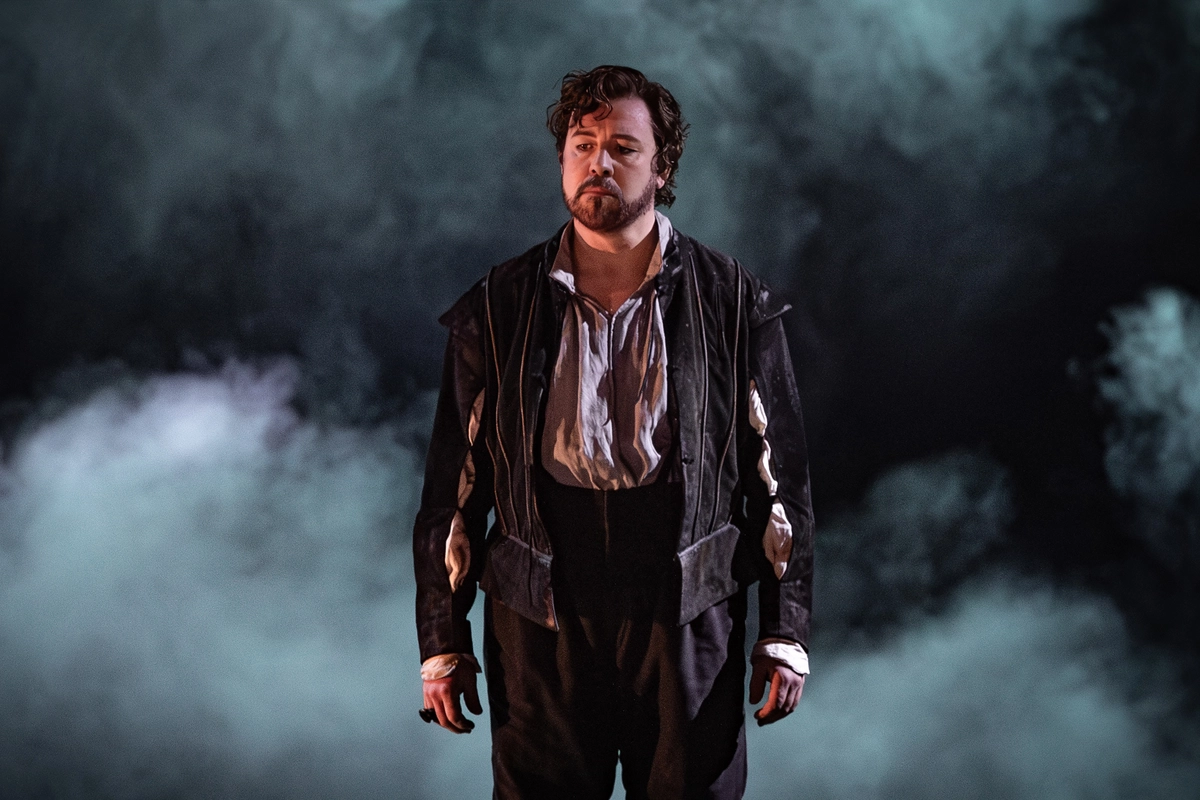
Simon Bailey
This interpretative shift reflects a broader tendency in contemporary opera direction to re-centre narratives around female subjectivity. Yet here it feels less like revelation than reduction. Wagner’s ambiguous metaphysics are narrowed into something more literal, more clinical, and arguably less interesting.
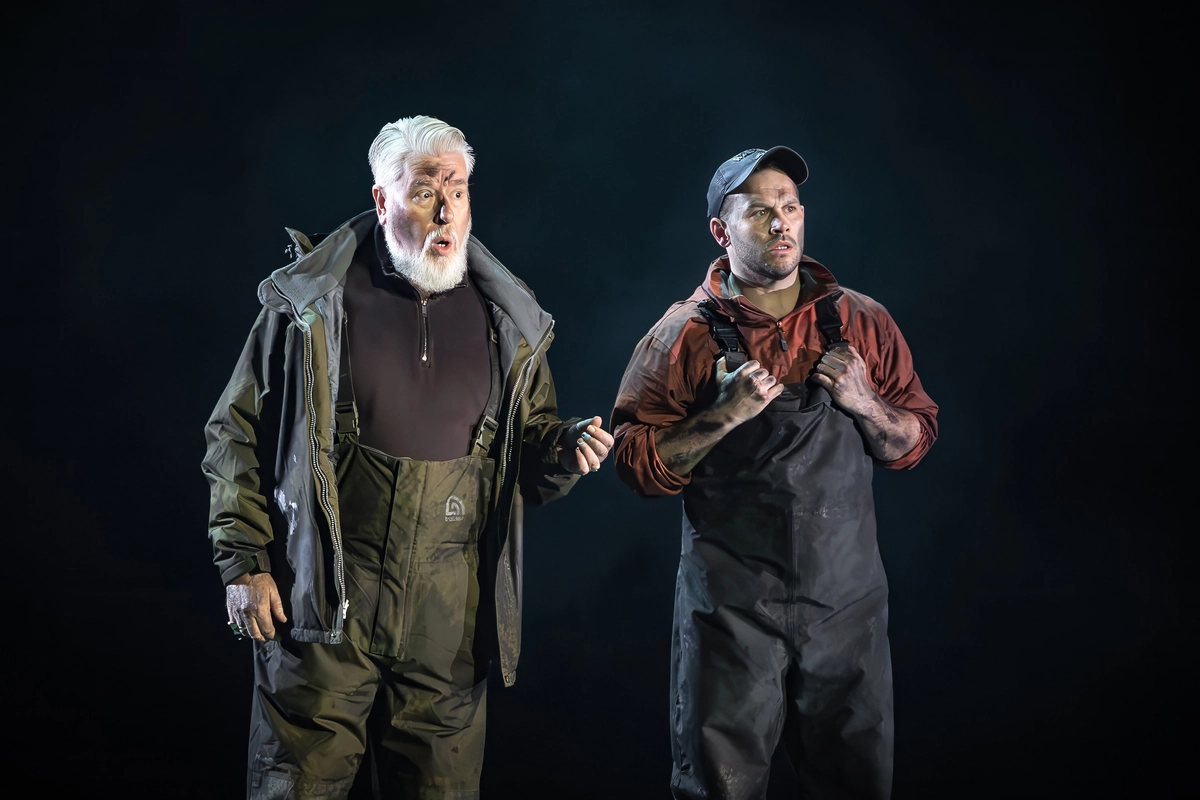
James Creswell and Trystan Llŷr Griffiths
The production is not without its gestures towards modern relevance, though some veer into the gratuitous. A fleeting moment in which the Steersman kisses a fellow sailor feels less like organic characterisation than a self-conscious nod to present-day expectations, a gimmick rather than an insight.
Elsewhere, one encounters echoes, clearly unintended, of earlier WNO productions. The recurring bed motif, which recedes into the back of the stage, inevitably recalls the final disappearance in Peter Grimes as recently staged by the company. The technique is hampered by being able to see what is happening once the bed or body is supposed to have disappeared.
Designer Elin Steele provides a largely abstract environment: a bland, indistinct painted panel that rises and falls to suggest spatial shifts but never convincingly conjures place. For an opera so rooted in elemental forces, sea, storm, horizon, the absence of any tangible landscape feels at odds with the creative team’s assertions of being influenced by the Welsh seascape. There is no set as such for Lizzie Powell to light, the props range from big lamps on what look like picnic baskets, some chairs dragged on and off, a period sofa and those beds. Oddly it seems to be sort of snowing from time to time.
Of course we have to ignore the text as there are no ships, treasure, photograph, spinning wheels, or anything much else for that matter. We are in the world of damaged lonely people rather than ghost ships. This is more One Flew Over the Cuckoo’s Nest than Pirates of the Caribbean.
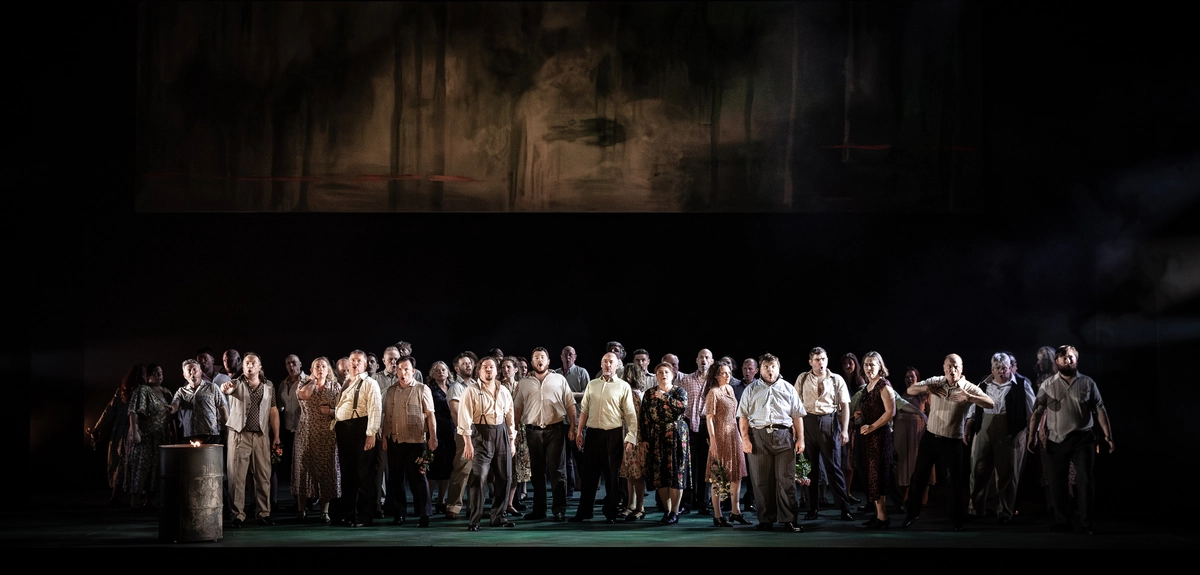
Dramaturgically, the production raises more questions than it resolves. The decision to have the living sailors transform into ghostly counterparts in Act III rather than two sets of mariners might, in theory, suggest a porous boundary between worlds. Yet this sits uneasily with earlier scenes in which the ghostly crew are already visibly present at the back of the stage. The internal logic falters; the symbolism collapses under its own inconsistency.
Similarly, the intermittent appearance of women in period costume, stationed at the rear like spectral witnesses and preparing the bed for the next “victim”, seems to gesture towards a lineage of failed Sentas, predecessors who did not fulfil the Dutchman’s demand for absolute fidelity. It is an intriguing idea, but one insufficiently developed, left hovering between suggestion and obscurity.
The Act II Spinning Chorus is also reimagined with the women at first sewing their frocks for when the menfolk return and then rearranging their chairs to sit around Senta to hear the fabulous tale of the Flying Dutchman, evokes a group therapy session. Again, the psychologically damaged Senta slips into some dark phantasmagorical experience. This mental instability is also suggested with the scenes with her already betrothed Erik. He seems the only person who can see that this poor girl is frankly away with the faeries.
None of this is to deny the musical achievement. Simon Bailey and Rachel Nicholls bring vocal assurance and the required interpretative nuance that the creative team has required from the central roles, even as the production reframes their relationship. It may not have the power and gut thumping chill that we get from some of the current great Scandinavian and German performers of such roles but Nicholls rewards us with elegant and refined singing, rich lyricism, while she and Bailey bring clear pronunciation to the German libretto.
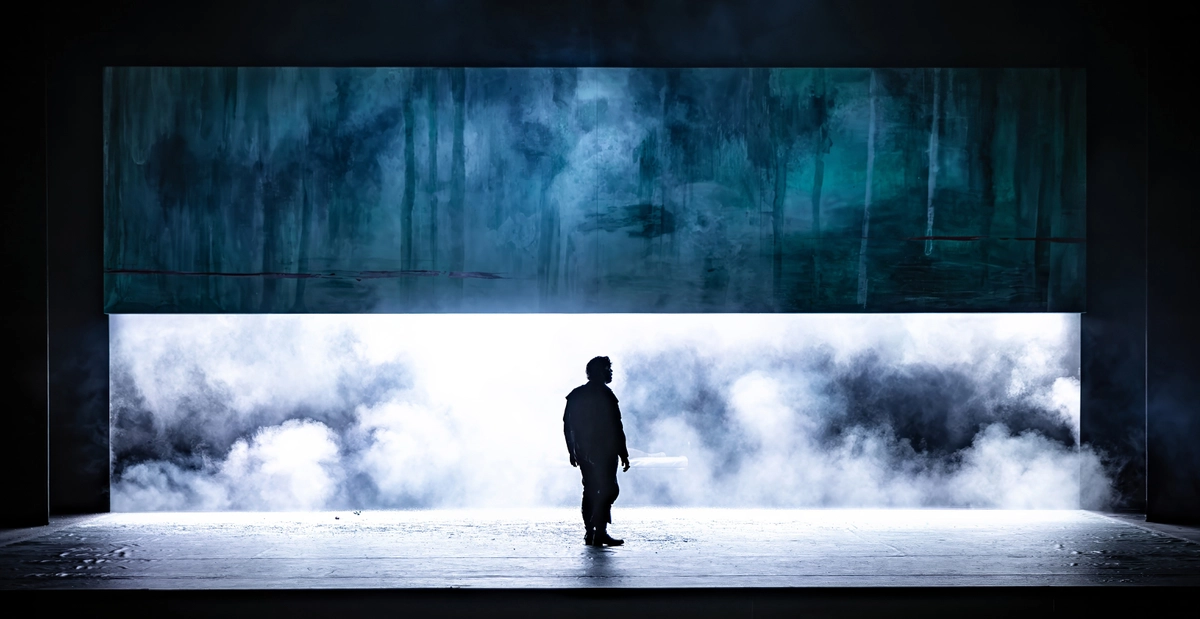
Senta’s father Daland, again sung with great clarity by James Creswell, appears not to have seen Married at First Sight, when he thrusts his daughter on the seemingly rich visiting sea captain. Perhaps he was thinking more about Channel 4’s The Undateables, with the bonkers Dutchman paired up with his oddball daughter. Either way, it is bound to end badly.
Trystan Llŷr Griffiths as the Steersman and Leonardo Caimi as Erik were too beautifully voiced tenors, the one longing for his girlfriend but when the booze kicks in thrusting his groin at anything that moves, while the other is a grey suited possibly meant to be dull chap who frankly gets off lightly when Senta ditches him for the Dutchman.
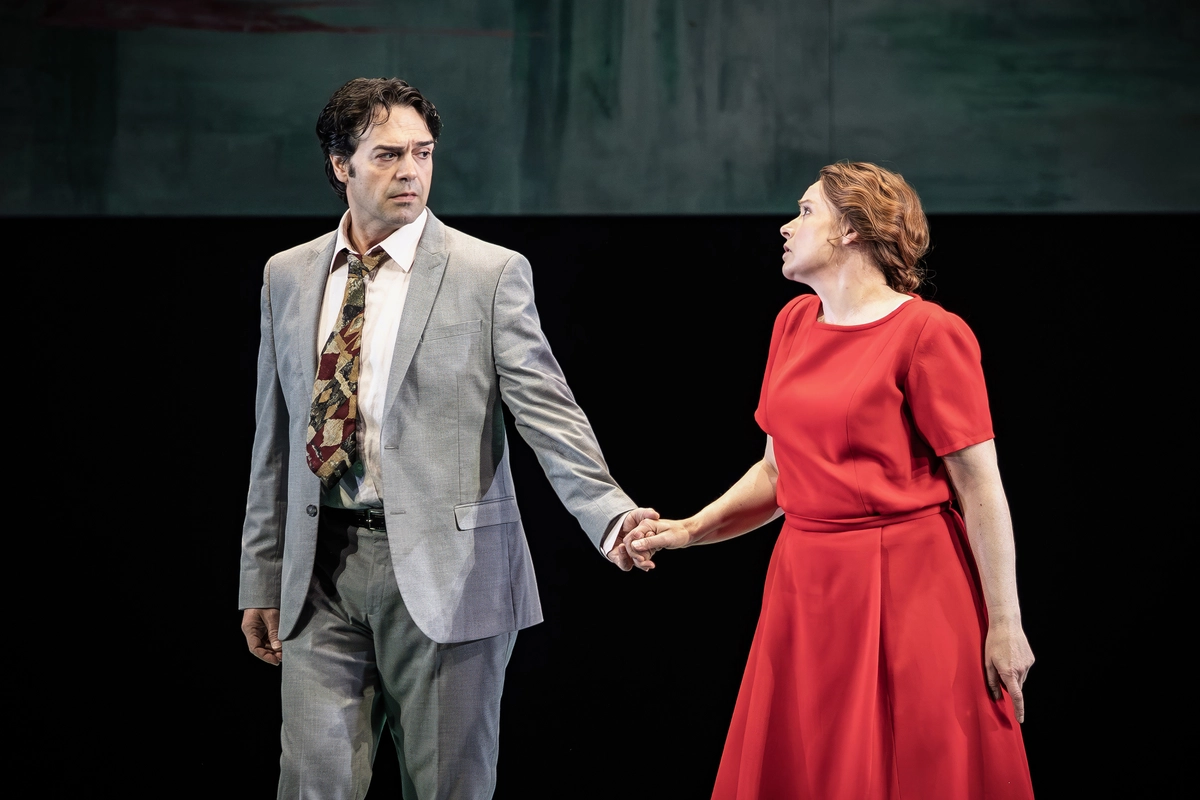
Leonardo Caimi and Rachel Nicholls
In his last season as music director Tomáš Hanus draws vigorous playing from the orchestra, some fine solo playing, and sweeps us along with aplomb as his players and the singers cook up a storm.. The production clearly wants the chorus to be allowed centre stage as much as possible and here it delivers with customary force.
Yet one leaves with a lingering sense of imbalance. In seeking to modernise and psychologise, this Flying Dutchman risks losing sight of its own centre of gravity. The opera’s vast, mythic horizons are narrowed to the interior life of a damaged child, compelling in outline, perhaps, but ultimately constricting.
And for a company facing an uncertain future, one cannot help but wonder whether such conceptual narrowing mirrors a broader cultural contraction: fewer resources, smaller canvases, and an ever more inward gaze. It is likely to be the last full-scale WNO created opera production we will see for several years and in a way its feel of being a stark, minimalist, almost semi-staged concert heralds the rope tightening to come.
One has to feel sorry for the job share bosses of WNO, Adele Thomas and Sarah Crabtree, for taking on a near Wagnerian poisoned chalice of a company that has lost the confidence of its life support machines, the Welsh and English arts councils. Even more sadly, both the politicians and public in Wales have decided WNO is low on their priority of worthwhile causes for financing.
With the financial Sword of Damocles over their heads there is precious little to be excited about in next year’s programming to look forward to, and this will probably continue into the following year, unless there is some miracle in funding.
Having followed WNO for more than 40 years, the company’s cycle of financial near disaster, recovery, and then back into the depths of economic depression, seems as doomed to continue as the Dutchman’s curse. The twosome has to put on a brave face when revealing the meagre next season schedule but arguing this is the start of an exciting new era is spinning a yarn a bit too far for we old salts…and we won’t mention splashing out on rebranding.
WMC until April 19 then touring until May 15.
Images: Craig Fuller
https://wno.org.uk/whats-on/dutchman
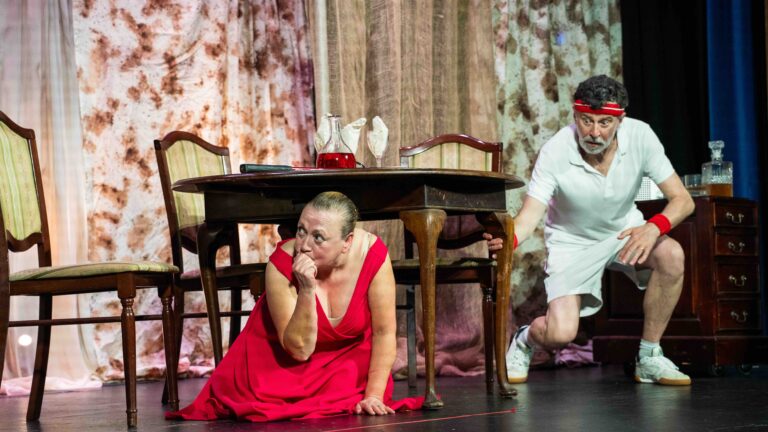
I saw the production in Plymouth. I must say firstly that I absolutely support and thank WNO for coming here. I also need to get off my chest that whilst understanding the intellectual argument I just disliked the design and production which gave the audience so little. I didn’t like the minimalist approach. There were so many disjointed concepts that I would not know where to start. However, Eric as a hunter in a suit and a sofa appearing for no reason in Act II just summed it up. However, we love you. Please come back.