Subverting or undermining the so-called American Dream has been both easy and inviting, not least for Americans themselves, with their hearts ever hovering over their sleeves. It’s been almost as easy as believing that the dream has been fulfilled, especially since radio and TV adverts began celebrating it with jingling monotony.
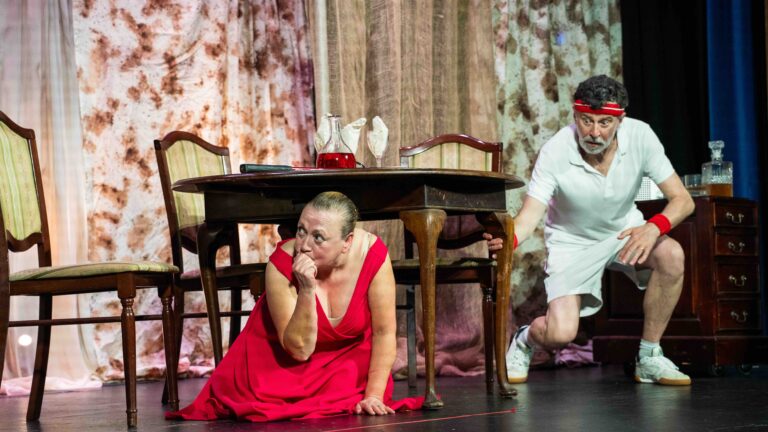
In Leonard Bernstein’s searing one-act opera, Trouble In Tahiti, things have long come to a pretty pass for Sam and Dinah, the suburban married couple with the son we never see. On designer and director Richard Studer’s set for this production by Mid Wales Opera, their house sits at a crazy angle, the emblematic picket fence has grown rickety, and the TV aerials thrust upwards as metaphorical markers of the victory of technology over reality.
Bernstein’s jazzy syncopations are soon rending the air like sheet lightning. The five singers – three forming a ‘chorus’ that not only close-harmonises in a mode that was employed to sell Marlborough cigarettes and Ronrico Rum but also sits close to the emotional disintegration it’s witnessing – barely have time to ponder. But ponder they do, if briefly.
This is the latest of MWO’s ‘SmallStages’ tour, which brings opera to places where more grandiose productions are not possible. A funding crisis almost saw the company fail, but it survived and the immediate future is secured, with plans that Studer, in a breathless but likeable intermission appeal to the audience for donations – SmallChange (or more) for SmallStages – could not reveal. But we do know what’s coming up next in 2026.
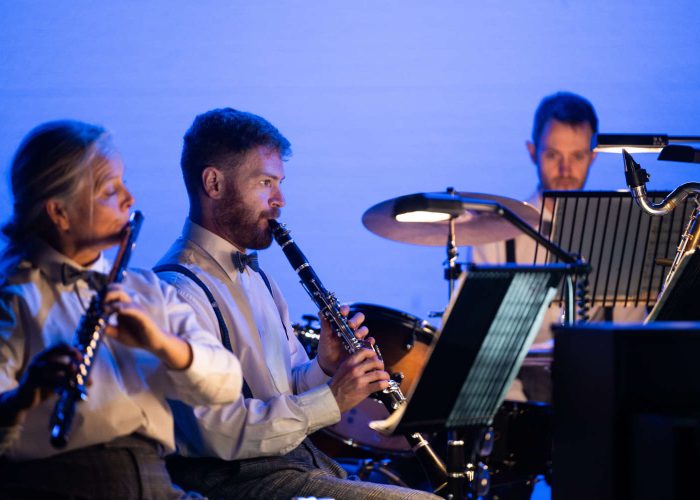
MWO’s production format is the same: one set and one small chamber band sitting cheek-by-jowl on stage with the cast, and the band playing a reduction of the opera score created by music director Jonathan Lyness. This time the septet, including Lyness directing from the keyboard, performs a popular instrumental arrangement by the American conductor and composer Bernard Yannotta. Sans strings except for the double bass, the orchestration is geared to Bernstein’s sassy rhetoric, which nevertheless can slip into genuinely sentimental dress.
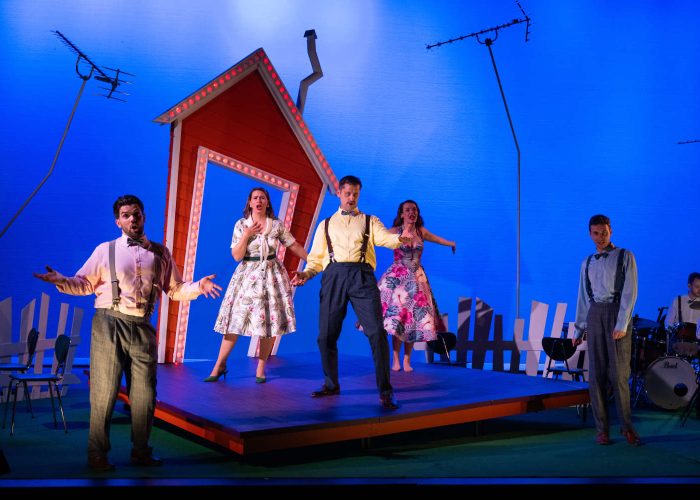
The meditation by Samantha Price’s Dinah and Samuel Pantcheff’s Sam arrives in moods that mirror the successful Bernstein stage shows between which Trouble In Tahiti was written – On The Town, Candide, and West Side Story. They are shows and they were hits. Though the sentiments are lodged in different dramatic provenances, Trouble In Tahiti‘s similarities to those works, especially in Dinah’s late confessionals and the faux-reconciliation of the two principals at the end was Broadway ushered into the opera house through an open door and marked by the resultant stylistic shifts of the music. Bernstein perhaps has never been given full credit for his ability to tread the no man’s land between razzle-dazzle musical and serious opera.
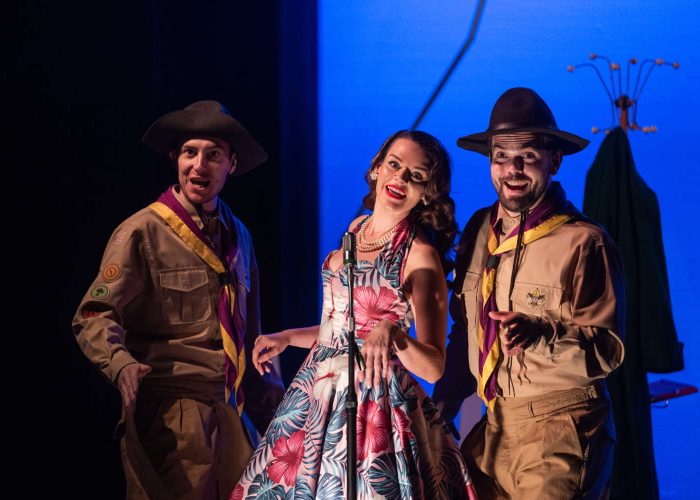
The trio chorus of Kirsty McLean, Sam Marston and John Ieuan Jones is immediately into the American Dream made musical, with a heads-together ditty on the joys of suburbia, the cosy assumptions of which are no sooner spread-eagled by an orchestral hurricane denoting the fall-out of marital disharmony, which not even Sam’s braggadocio can deny.
Not least of MWO’s achievements on these tours is to adapt to different venues, this one paradoxically tight enough to intensify the relationships of all five players, as the couple’s proximity and the chorus’s satirical contiguity deal with the shudders of disharmony and decline.
The MWO cast delivers a performance of sustained power and grace and the orchestra revels in its role as aider and abetter of strife and its attempts at resolution. With Lyness at the keyboard, the band is Nicola Woodward (flute), Dave Ayre (bass), Chris Goodman (clarinet), James Harrison (timpani, kit, and percussion), Peter Richards (trombone), and Sian Davis (trumpet).
Apart from marriages crumbling, the opera has contemporary relevance in the way technology rules everyday life: the radio trilling bogus optimism, the phone on which Sam can boast of his male prowess, the TV offering visual glimpses of more fake idylls, and the cinema showing the film Trouble in Tahiti. The film is an essay in superficiality, which Dinah sees through and which the men of the chorus in this production mock with grass skirts, swaying hips, and coconut-shell bras. The stages might be small but telling detail, like the backdrop shadows created by Bridget Wallbank’s lighting, is never ignored.
As is usual on MWO tours, the brevity of the main feature gives the company the chance to sing its way through related musical material, in this case titled Great American Songs, from that non-existent tome, the Great American Songbook; but also including two traditional tunes arranged by Aaron Copland and Sure on this Shining Night by Samuel Barber, an exquisite example of American lieder. There were twelve items in all, seamlessly despatched by the company and the band and including Well, Did you Evah (from High Society), Someone to Watch Over Me (from Oh, Kay!), and If I Only had a Brain (from The Wizard of Oz).
Further tour dates – Nov 14: Wyeside Arts, Builth Wells; Nov 18: Ffwrnes, Llanelli; Nov 19: Theatr Mwldan, Cardigan; Nov 20: Aberystwyth Arts Centre; Nov 26: Pontio, Bangor; Nov 28: Ludlow Assembly Rooms; Dec 2: St Andrew’s Church, Presteigne; Dec 4: Criccieth Memorial Hall; Dec 5: Neuadd Dyfi, Aberdovey.